The room has no windows and eleven screens. On four of them, robots fold laundry in apartments three time zones away; on the others, queues of intervention requests tick upward, each one a machine admitting it is stuck. A person in a headset takes the next ticket, seizes a pair of distant hands, frees a snagged sleeve, and releases. Total human time: nine seconds. On the customer’s side, the robot never stopped being “autonomous.” Rooms like this exist behind a meaningful share of the robots you have seen in videos - and the interesting story was never that they exist. It is what the industry does with the word.
Why remote hands make economic sense
The case for teleoperation is straightforward arithmetic. A robot body can stand where labour is scarce, dangerous or expensive, while the judgement that drives it sits anywhere on earth - which means one operator’s attention can be sold across time zones, hazard premiums vanish, and a physically demanding job becomes a desk job with a commute of zero. Add supervision ratios and it compounds: an operator overseeing several mostly-capable robots, intervening only on the hard seconds, multiplies human labour rather than merely relocating it. That intervention model is also the honest bridge to autonomy - every correction an operator makes is a labelled training example of exactly the situations the software cannot yet handle, gathered at the point of failure. Several of the most credible robot-learning efforts are, at bottom, teleoperation businesses farming their own training data.
The gradient nobody labels
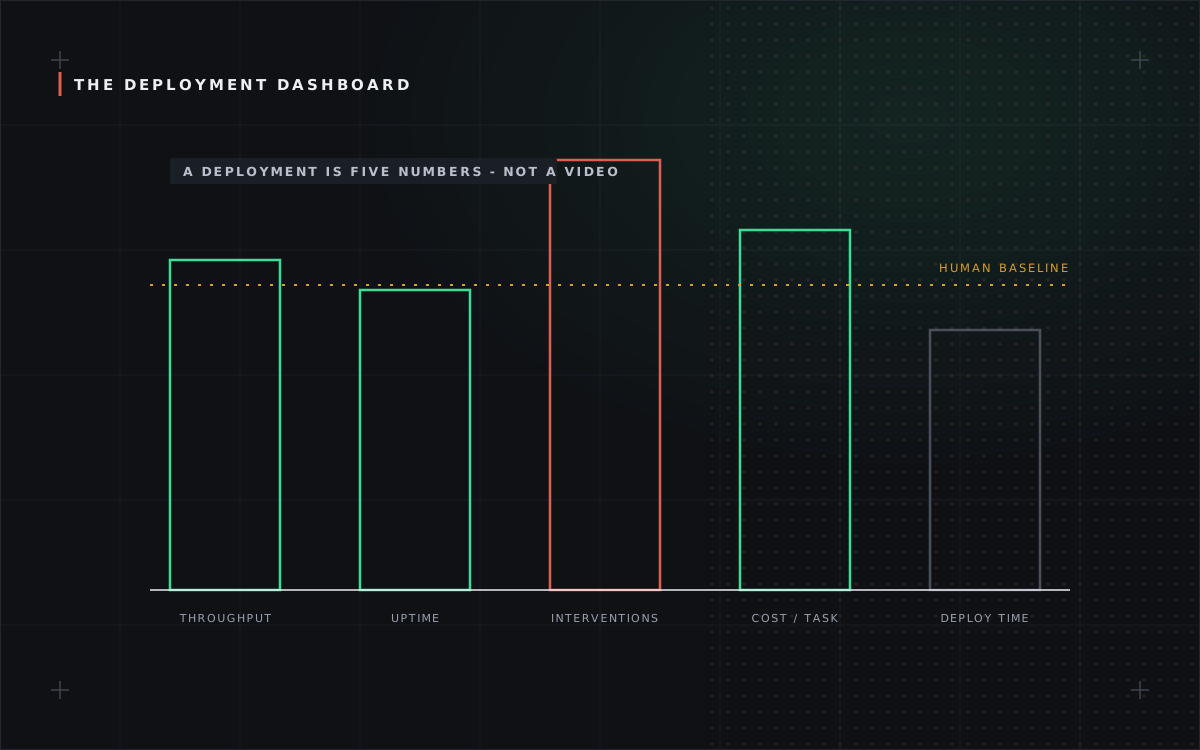
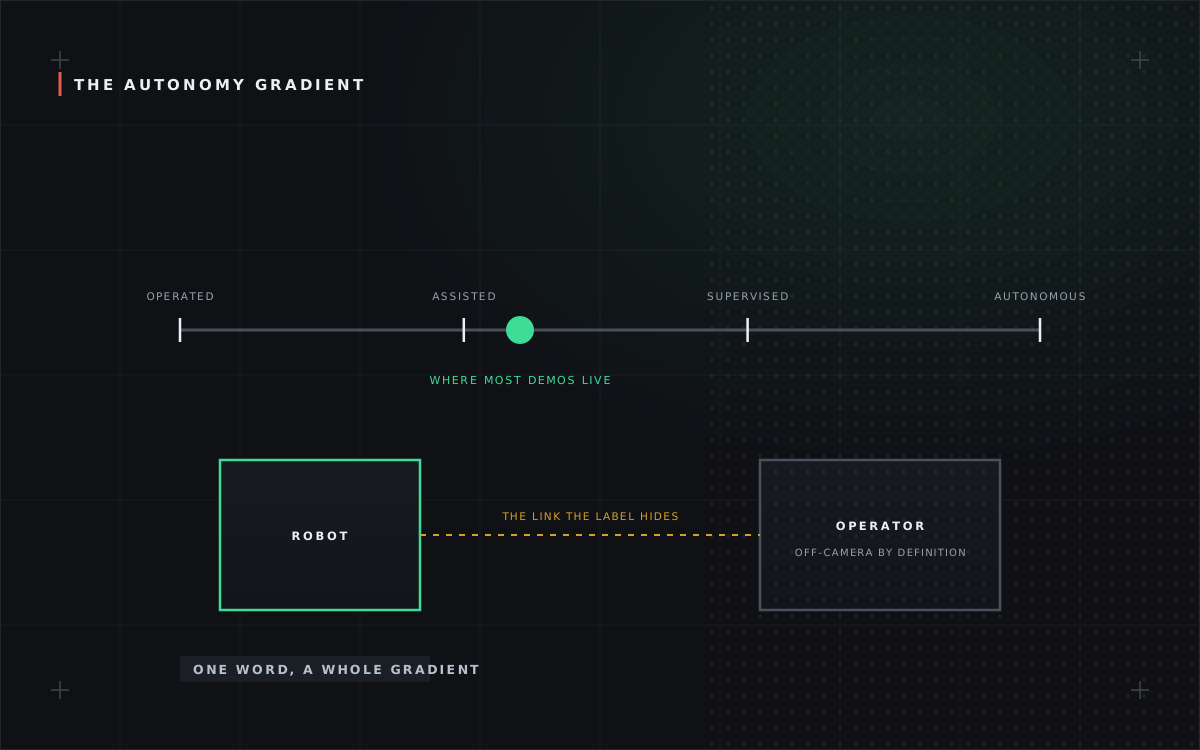
The trouble is that between “a person drives everything” and “no person anywhere” lies a wide gradient - shared control, waypoint approval, exception handling, remote resets - and marketing collapses the whole gradient into one flattering word. A robot that navigates alone but asks a human to approve each grasp is a real product; calling it autonomous is a claim about labour costs that its unit economics do not support. Investors have learned to ask about intervention rates for exactly this reason: the ratio of robots to remote humans is the business model, and it is the number most demos are staged to hide.
Disclosure is cheap; its absence is data
What would honest labelling look like? Nothing onerous: state whether footage is autonomous, assisted or operated; publish the current supervision ratio; describe what triggers a human takeover. Companies confident in their trajectory increasingly do - a rising robots-per-operator curve is a better pitch than a hidden operator - and their willingness to publish it has become one of this desk’s cleanest quality signals. Where the label is missing, the default assumption should be human involvement until shown otherwise, not because deception is universal but because the incentive gradient points one way and disclosure costs nothing to those with nothing to hide.
The questions that sort the field
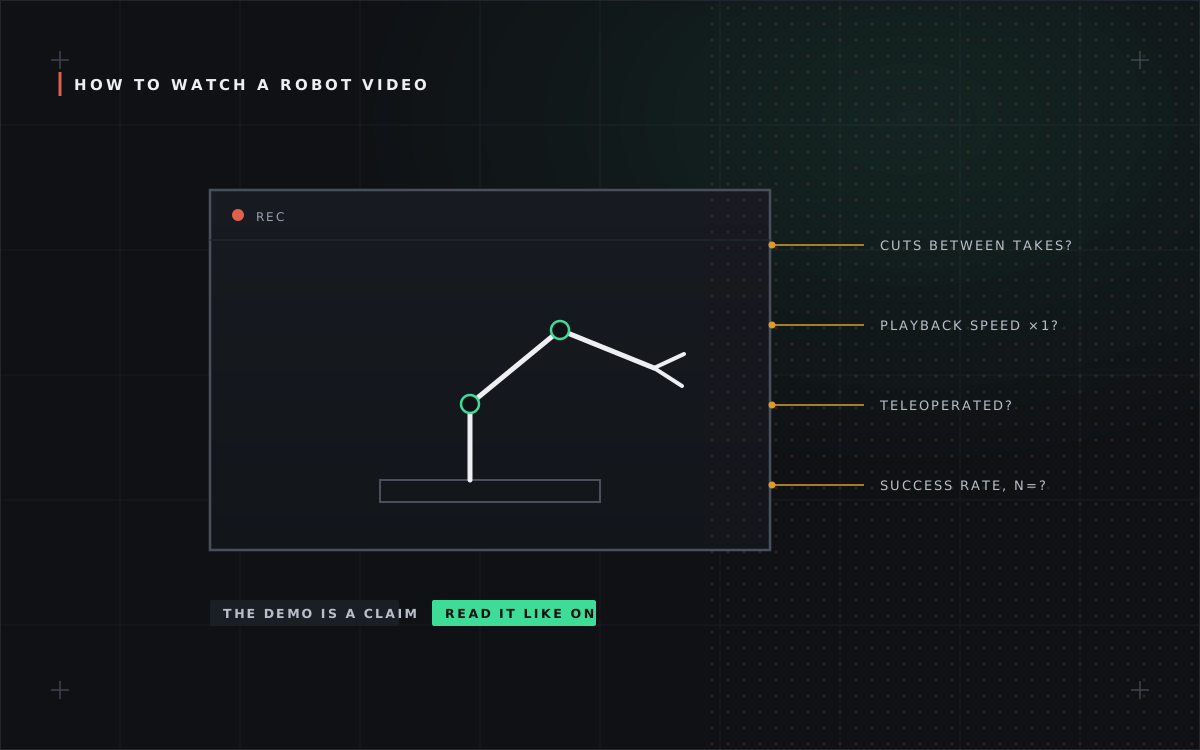
When teleoperation is in the room - and it usually is - four questions establish the facts. What, precisely, does the operator do, and how often? What is the supervision ratio today, and its trend over the last year? Where do the operators sit, under what labour conditions and wages - a question the relocation economics make unavoidable? And is the intervention data feeding a learning loop, or is the “autonomy roadmap” a slide? A company with a real answer to the fourth question is building a robotics company. One without it is building a very expensive call centre - which can still be a business, just not the one on the pitch deck.
The ratio of robots to remote humans is the business model - and it is the number most demos are staged to hide.The Robotics Desk
FIELD NOTES - THE QUESTIONS THAT SORT THE FIELD
- What exactly does the operator do, and how often - full control, waypoints, or exceptions only?
- Supervision ratio today, and its slope over the last year. A rising robots-per-operator curve is the honest pitch.
- Where do the operators sit, under what conditions and pay - the relocation economics make it a fair question.
- Does intervention data feed a learning loop - or is the autonomy roadmap a slide? The answer separates robotics companies from very expensive call centres.