Robotics demonstrations are among the most persuasive and least reliable artefacts in technology. A short, well-lit clip of a machine folding laundry or sorting parts can raise a funding round - and reveal almost nothing about whether the system works. Reading one honestly is a skill, and it comes down to a handful of questions.
Is a human in the loop?
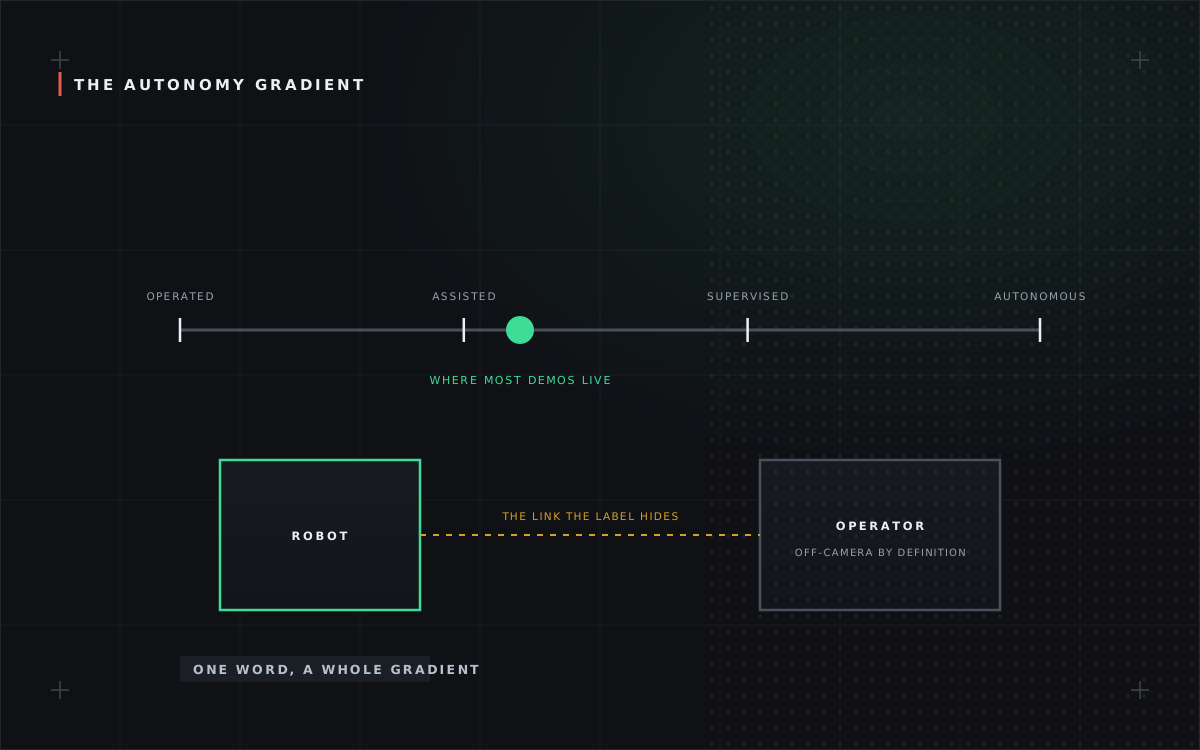
The first question is teleoperation. Many impressive demonstrations are, wholly or partly, a person operating the robot remotely rather than the robot acting autonomously. This is not necessarily dishonest - teleoperation is a legitimate stage, and a source of the training data autonomy is learned from - but a video that lets you infer autonomy while a human drives is doing something misleading. Look for explicit statements. The absence of the word “autonomous” is itself information.
| What you see | What to ask |
|---|---|
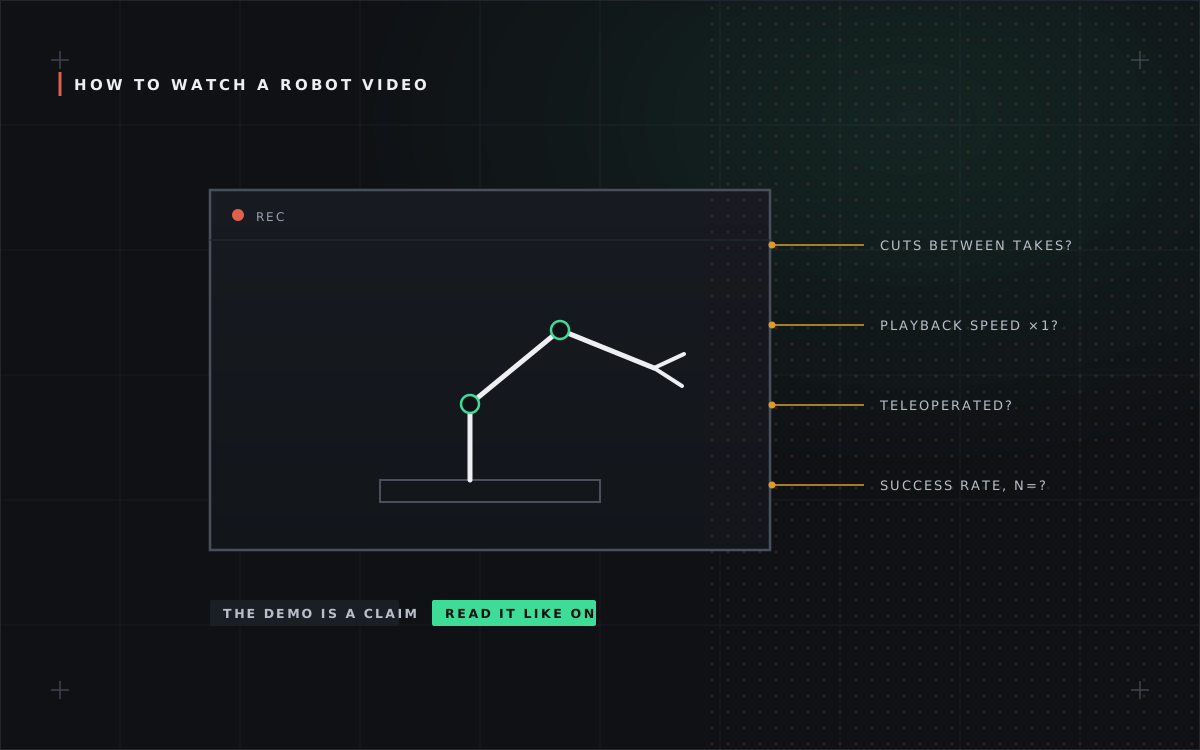
| A smooth, continuous take | How many attempts were filmed - and were any cuts hidden? |
| Impressive speed | Is playback at 1×? Speed-ups are routine and rarely labelled |
| No human in frame | Is it autonomous, scripted, or teleoperated off-camera? |
| One object, one scene | Does it generalise - different objects, lighting, placement? |
| “It works” | Over how many trials, and what counted as success? |
Is it one take or one in a hundred?
The second question is success rate. A single flawless attempt tells you the task is possible, not that it is reliable. A system that succeeds once in fifty tries can still produce a perfect highlight reel. Reliability - the share of attempts that succeed, unedited - is the number that matters for deployment, and it is the number demos are engineered to obscure. Ask what happens on the attempts you weren’t shown.
A single flawless attempt tells you the task is possible, not that it is reliable.
Is it real time?
The third question is speed. Watch for uncredited speed-ups. A robot moving fluidly at normal speed is a different achievement from the same motion sped up several times to hide long deliberation between actions. Cuts between sub-tasks can conceal minutes of reset or recomputation. Continuous, real-time footage is far more informative than a montage.
How narrow is the setup?
The fourth question is generalisation. A machine that performs in one fixed, rehearsed environment - identical lighting, known object positions, a staged bin - has shown far less than one handling variation it hasn’t seen. The gap between a controlled demo and an unstructured warehouse is where most robotics companies actually live, and it is precisely what a staged clip is designed to skip over.
The honest version exists
None of this is a reason for cynicism about robotics, which is making genuine progress. It is a reason to read its evidence the way you would read any other claim: by asking what was measured, under what conditions, and what was left out of frame. The companies doing serious work tend to tell you the success rate, show real-time footage and describe the failures. The tell is not slickness. It is what the polish is hiding.
A worked example
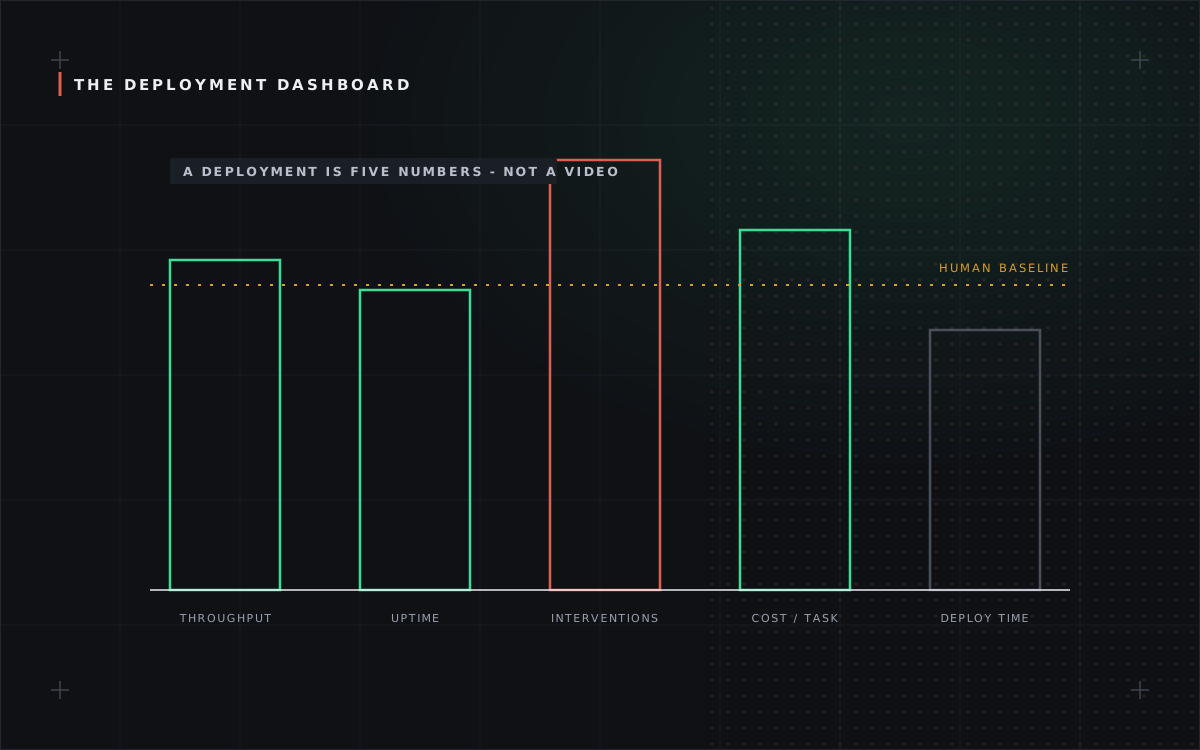
Take a typical sixty-second clip: a humanoid unloads boxes onto a conveyor, smooth and unhurried, one continuous shot. Apply the guide. The single take is a choice - how many attempts preceded it? The unhurried pace invites the speed question - and if the motion looks faintly dreamlike, playback is faster than capture. No human appears, but teleoperation happens off-camera by definition, so absence proves nothing; the tell is latency, the tiny hesitations of a remote operator, or the company’s own careful phrase “autonomy-ready”. The boxes are identical and ideally placed - generalisation unknown. And “unloads boxes” is not a metric: rate per hour, over how many hours, with how many interventions? Sixty seconds of footage, five open questions - which is not cynicism, just the correct prior for an industry where video is the primary fundraising instrument.
The questions press teams hate
When this desk engages a robotics company, five questions do most of the work, and their reception is itself a signal. How many takes was that? Is the video real-time? What was teleoperated, then and now? What is the intervention rate at your best deployed site? What does a task cost, fully loaded, against the human alternative? Confident companies answer some and decline others with reasons; companies with only a video answer none and offer another video. The gap between those two responses is most of what a reader needs to know.
Every robot video is a survivor. The question is how many takes died so this one could live.
FIELD NOTES - THE DEMO CHECKLIST, LAMINATED
- Cuts and speed - single continuous take at 1×, or edited highlights?
- Environment provenance - their lab, or a site they don’t control?
- Human presence - who is off-frame, and what can they do?
- Failure disclosure - takes attempted, interventions, recovery behaviour. Teams proud of these publish them.