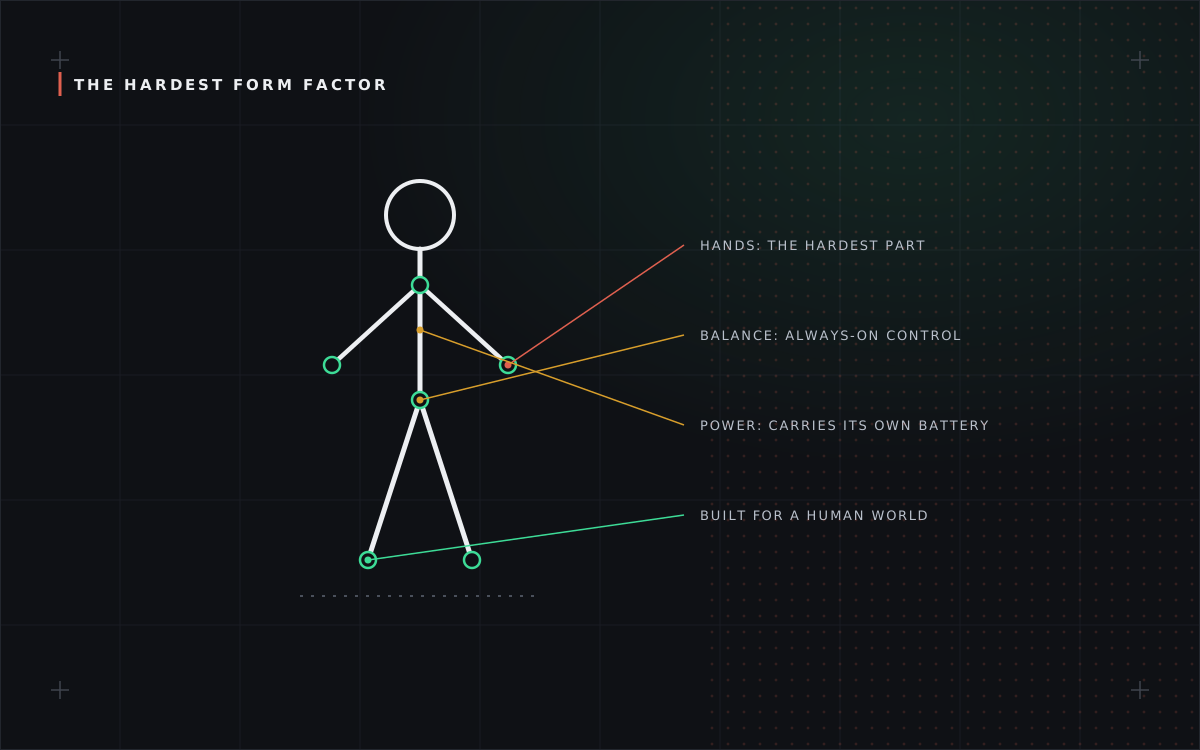
If you wanted to make robotics as hard as possible, you would specify it like this: balance the whole machine on two points of contact, give it hands, and run it on a battery it must carry. That specification has a name - the humanoid - and it currently absorbs a remarkable share of the industry’s capital and attention. Both facts deserve explanation.
Three compounding difficulties
Balance. A wheeled base is stable by default; a biped is falling by default, saved continuously by control. Every task a humanoid performs is performed on top of an always-running balancing act, which consumes compute, power and error budget before the actual work begins.
Hands. Dexterous manipulation is widely regarded inside the field as harder than locomotion. Human hands pack dozens of degrees of freedom and dense touch sensing into a small, robust, self-repairing package; robotic hands must approximate that with motors, tendons and sensors that add cost and failure points at the exact part of the machine that touches the world hardest.
Power. Legs and hands are energetically expensive, batteries are heavy, and the robot carries its own. The result is a standing tension between runtime, payload and weight that wheeled or fixed robots simply don’t face.
The one argument that justifies it
So why build them? Because the world is already built for the human form. Doorways, stairs, shelves, vehicles, tools - decades of infrastructure assume a human-shaped operator. A machine matching that shape can, in principle, be dropped into brownfield environments without redesigning them, and one platform could amortise its enormous development cost across thousands of different tasks. The bet is not that a humanoid is the best machine for any single job - it almost never is - but that generality times existing infrastructure beats specialisation times greenfield redesign.
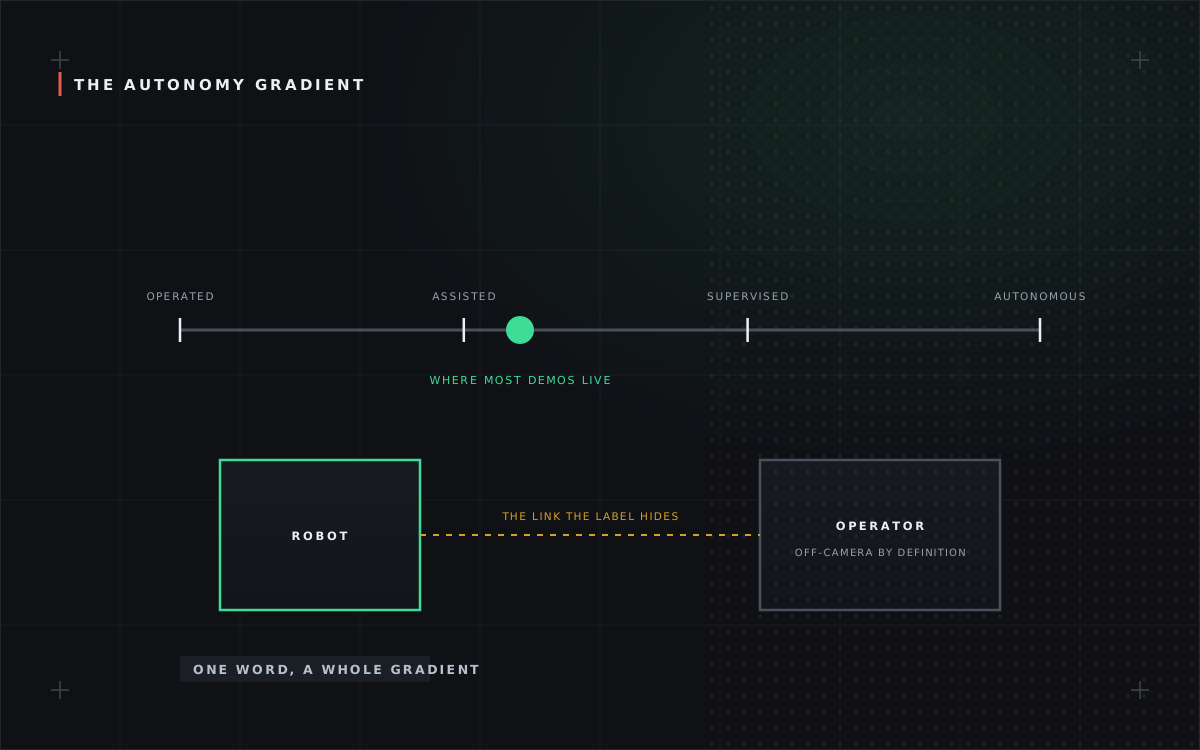
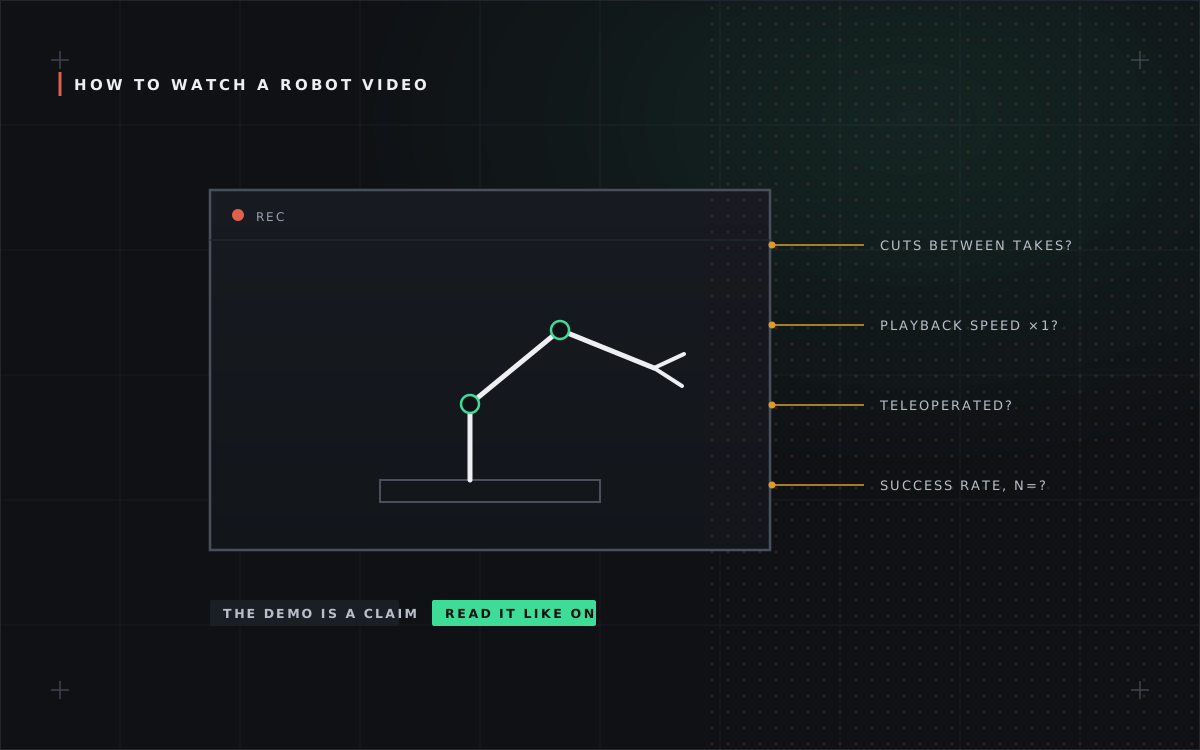
That is a coherent thesis, and an unproven one. It converts directly into the questions worth asking of every humanoid announcement: how long does it run, how often do hands fail, how much is teleoperated - and, above all, what does a deployed unit cost per task against the specialised alternative? The form factor is a claim about economics. Read it like one.
The hands, in particular
If one subsystem decides the humanoid bet, it is the hands, and the difficulty deserves specifics. A human hand offers roughly two dozen degrees of freedom, thousands of touch receptors, and tendons that spring-load energy - packed into a robust, self-healing envelope that survives a decade of daily abuse. Robotic equivalents must choose among sins: fully actuated hands are heavy, costly and fragile at exactly the point of maximum collision; simplified grippers are durable but surrender the generality that justified the form factor; tendon-driven designs split the difference and inherit maintenance burdens of their own. Touch sensing lags vision by a generation, so most manipulation still runs substantially open-loop after contact - which is why demos favour rigid boxes over cables, cloth, and anything that squishes. Whenever a humanoid video impresses you, watch the hands twice.
What a credible humanoid claim looks like
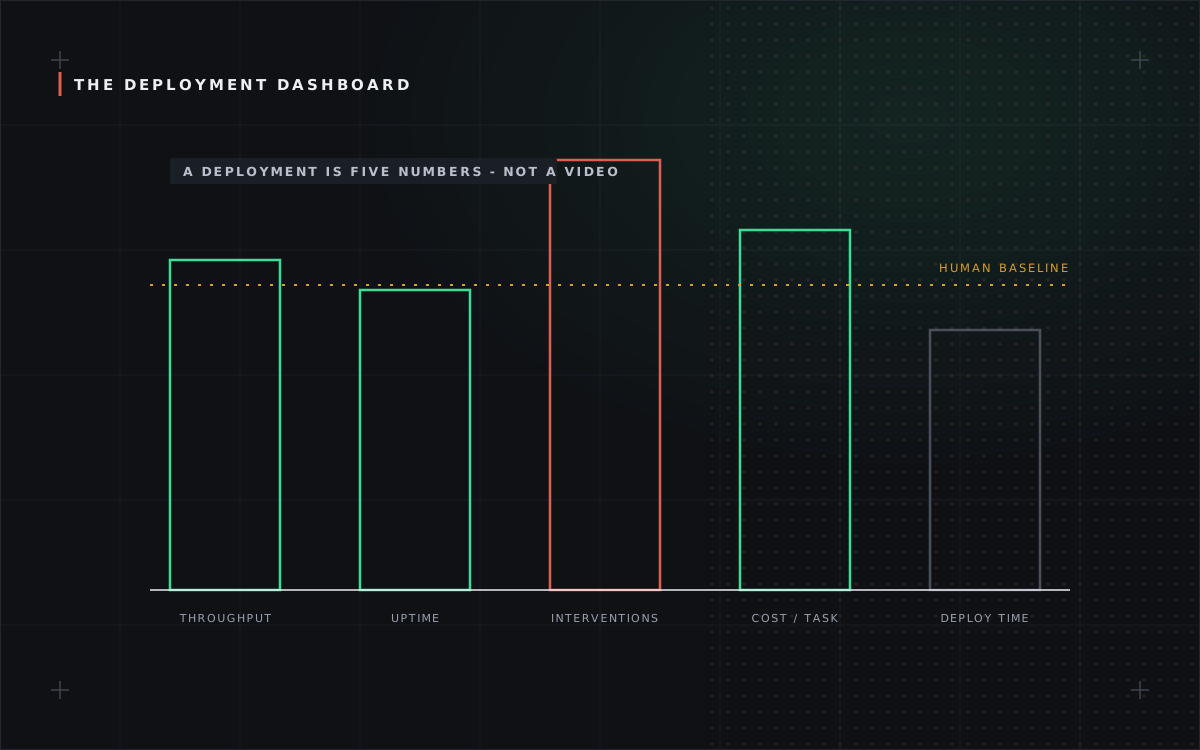
Because the thesis is economic, credible claims are operational: hours between failures for the hands specifically; battery runtime under the actual task, not standing; tasks per charge; the teleoperation share today and its trend; and price against the special-purpose machine that already does the target job. Companies making progress increasingly publish exactly these - dull, falsifiable, comparable - while the rest publish choreography. The sorting is convenient for readers: on this desk, a humanoid announcement is weighed by the ratio of tables to footage.
The middle path the debate ignores
Framed as humanoids-versus-arms, the argument misses where much of the actual deployment is happening: purpose-shaped mobility. Wheeled bases with one or two capable arms keep the brownfield advantage where floors are flat - which describes most warehouses and factories - while deleting the balance problem, halving the joints that can fail, and doubling battery life for the same cells. Quadrupeds take the inspection niches where terrain is the point. The humanoid’s irreducible territory is smaller than the funding suggests: stairs, ladders, vehicle cabs, and tasks choreographed so tightly around the human body that reshaping the work costs more than imitating the worker. That territory may still be enormous - it is also the hardest slice of an already hard problem, which is worth remembering when the same demo is offered as evidence for the whole map.
The humanoid bet is not that two legs beat four wheels. It is that one general robot beats a thousand specific ones - a software thesis wearing a hardware costume.
FIELD NOTES - WHAT WOULD CHANGE OUR MIND
- A humanoid pilot converting to a multi-year production contract with published task rates - pilots began appearing in factories from 2024; conversions are the evidence.
- Cost curves - a credible sub-$50k bill of materials at volume would rewrite the arithmetic.
- Cross-task transfer demonstrated on hardware: the generality premium, finally cashed.