For a decade the primary source on any robot was a video, and this desk wrote its demo manual accordingly. That era is ending on the industry’s own initiative: UBTech listed in 2023, Unitree filed its 363-page prospectus in March, and the queue behind them means the next few years of robotics claims will increasingly arrive with legal weight attached. A filing is a different genre from a demo - harder to fake, easier to misread. This manual is for reading it.
First, recalibrate what a filing is
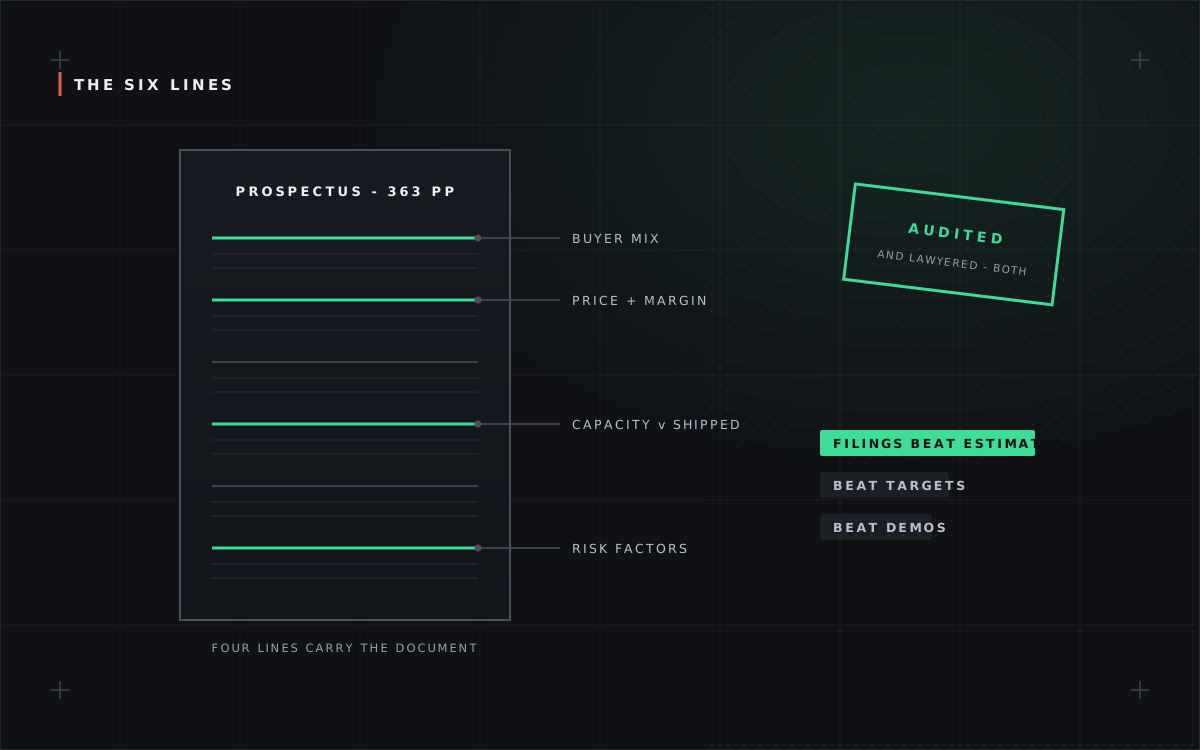
A prospectus is a marketing document written under penalty of law - both halves of that sentence matter. The numbers are audited and the omissions are lawyered; the honesty lives in specific mandatory disclosures, and the salesmanship lives everywhere else. The desk’s standing hierarchy applies with a new top rung: filings beat analyst estimates, which beat CEO targets, which beat stage demos. Within the filing itself, the six lines below outrank the other 350 pages.
- The buyer mix - the single most honest maturity gauge in the document. Over 70% of the leading maker’s 2025 humanoids went to research and education buyers, by its own disclosure. The quarter that share drops below half of units is the quarter the industrial thesis becomes real; until then, “robots replacing workers” is ahead of the invoices.
- Price curve and gross margin, read together - either alone misleads. Falling prices with collapsing margins is desperation; falling prices with margins near 60% is vertical integration - a company that makes its own motors, reducers and sensors choosing volume. $85,000 to $25,000 in two years with margin improvement is the strongest single sentence in the Unitree filing.
- Revenue mix over time - what the company actually is, versus what it says it is. Humanoids at 1.9% of core revenue in 2023 and 51.5% in 2025 is a genuine pivot, on paper. A maker whose “humanoid future” still bills as 5% of revenue is a quadruped company with a press strategy.
- Capacity committed versus units shipped - the gap is the promise. Committed capacity of 75,000 humanoids a year against 5,500 shipped is a fourteen-fold wager, disclosed. Neither number is a lie; confusing them is the reader’s error, and most coverage makes it.
- Customer concentration and related parties - where subsidy and self-dealing surface, if they do. State programmes arrive in filings as concentrated buyers, government grants, or related-party revenue; a maker whose top five customers include its own investors is telling you something the launch video did not.
- The risk factors - the one chapter written by the defence. It is boilerplate plus confession, and the confession is findable: when a company lists “practical deployment outside controlled environments” among its risks, it has told you, under penalty of law, exactly what the desk’s demo manual suspected.
THE ADJACENT EVIDENCE CLASS - SPECIFICATION LANGUAGE
Filings are pulling the whole industry toward checkable prose. A Guangdong line that opened in March published its process as specification: 24 precision assembly stages, 77 inspection checkpoints, 41 simulated work-condition tests per unit. Numbers like these are not proof of quality - they are hostages to verification, and offering them is itself a signal. The desk’s rule: a maker that publishes checkpoints has agreed to be audited; a maker that publishes backflips has not.
What a filing still cannot tell you
Utilisation. A shipped robot is a milestone; a robot still working at month eighteen is a business, and no prospectus discloses warranty claims, service intervals or hours-in-use by cohort. Those arrive later, in annual reports and the occasional lawsuit - which is why this desk’s scoring plan for the sector runs on post-listing results against the filing’s own targets. A public company can no longer round up. That, more than any number inside it, is what the document changes.
FIELD NOTES - THE FILING CHECKLIST
- Buyer mix first - research share is the maturity dial; watch it quarterly once listed.
- Prices with margins - integration and desperation look identical until you read both lines.
- Capacity is a wager, not a shipment - report the gap, not the bigger number.
- Read the risk factors like a confession - the lawyers already did your skeptical work.
- Diary the targets - every disclosed number acquires a date; the filing is a claims ledger that sues back.