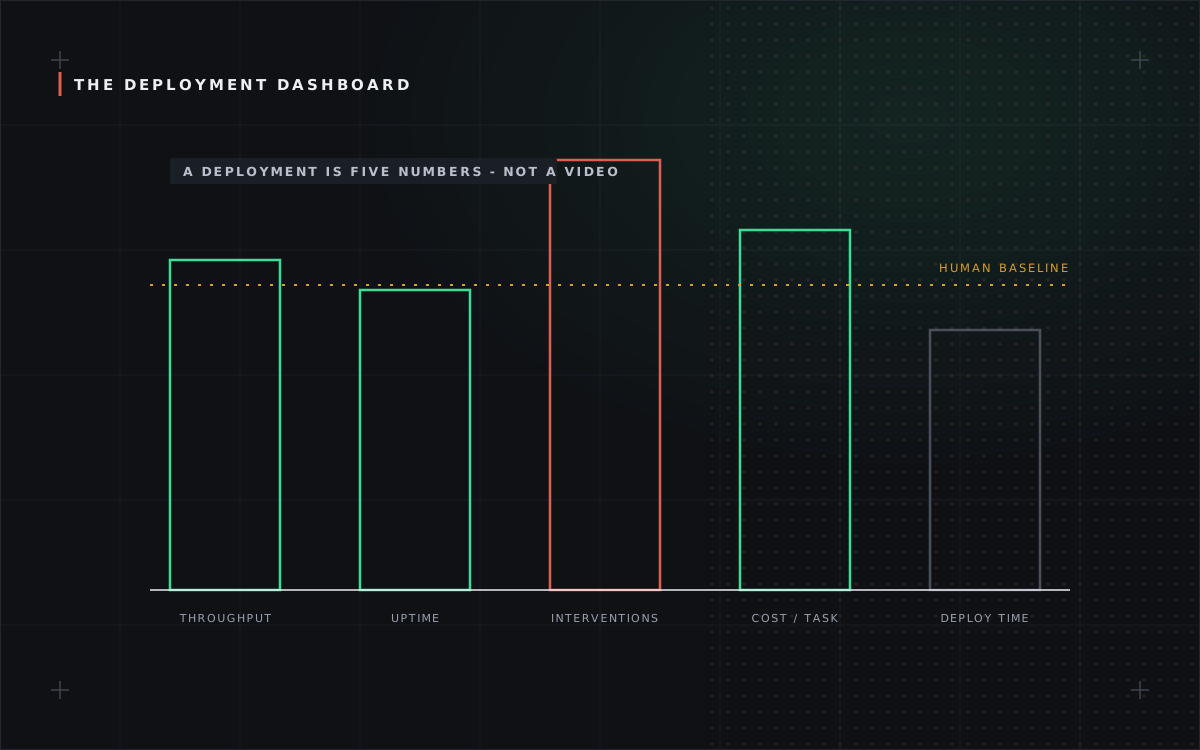
Brief: the question “are Chinese humanoids real” stopped being answerable by video this spring, because the evidence class changed. The world’s largest humanoid maker filed a 363-page prospectus with the Shanghai Stock Exchange; a contract factory published its inspection-checkpoint count; a five-ministry action plan set a national deployment target. This desk reads filings, not backflips. The ledger follows.
~13,000Global humanoid shipments 2025 - ~80% from Chinese firms
5,500Humanoids Unitree sold in 2025, per its IPO filing
$85k→$25kUnitree’s average humanoid price, 2023 → 2025
100,000Deployed humanoids targeted by China’s 2027 action plan
The filing, read cold
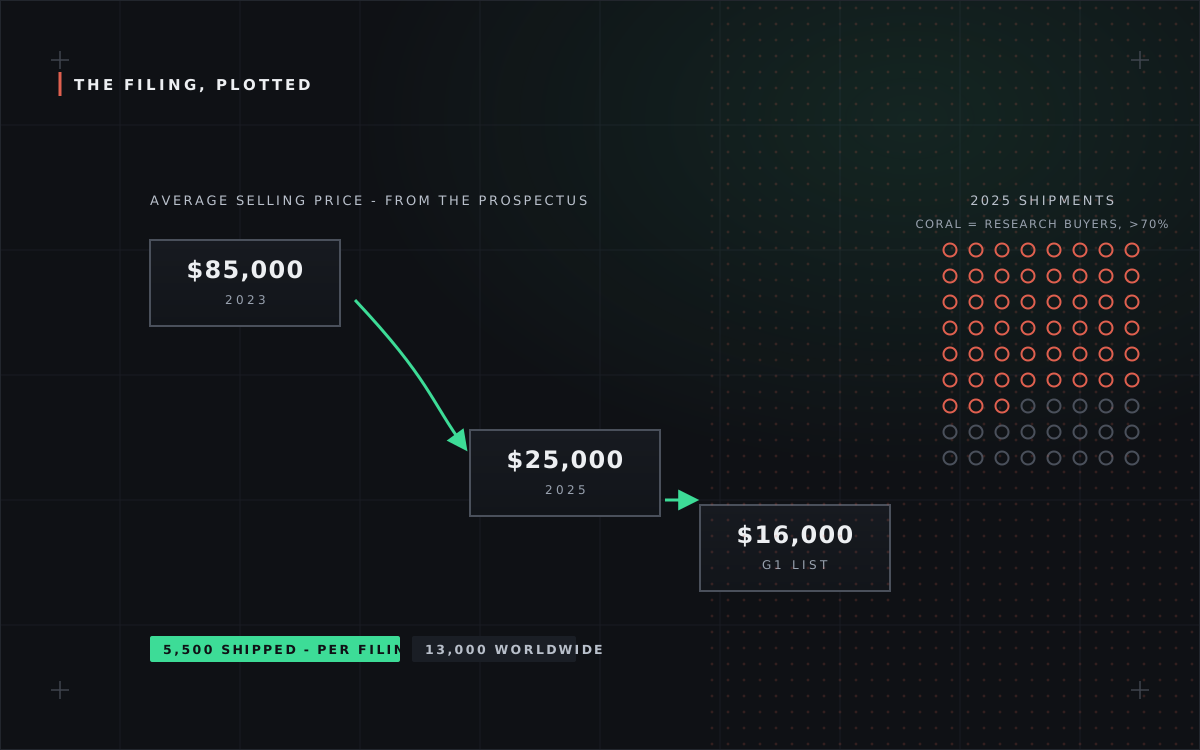
Hangzhou-based Unitree filed on 20 March 2026 to raise 4.2 billion yuan - about $610 million - on the Shanghai Stock Exchange, and the prospectus is more informative than every stage performance combined. Humanoids went from 1.9% of core revenue in 2023 to 51.5% in 2025. Average selling price fell from roughly $85,000 to $25,000 in two years while gross margin improved to nearly 60% - the signature of a company that manufactures its own motors, reducers and sensors. And the honest line most coverage skipped: over 70% of the humanoids it sold last year went to research and education buyers, not factories. Committed capacity expansion runs to 75,000 humanoids and 115,000 quadrupeds a year. Even first place is contested in the healthiest possible way: Omdia counts Shanghai’s AgiBot top for 2025 at 5,168 units - a 39% global share - which Unitree’s own 5,500 disputes; the two counts resolve “shipped” differently, and this desk reports the disagreement rather than adjudicating it. The CEO’s own stated 2026 target is 20,000 units; Morgan Stanley doubled its China-wide 2026 forecast to 28,000. Both numbers are now checkable against a public listing - which is precisely why the filing matters more than the forecast.
The factory floor, in specification language
The industrialisation claim also comes with checkable specifications now. A Leju Robotics and Dongfang Precision line that opened in Guangdong on 29 March 2026 - billed as the country’s first capable of 10,000 humanoids a year - published its process: 24 precision assembly stages, 77 inspection checkpoints, and 41 simulated work-condition tests per unit before shipping. AgiBot has announced its 10,000th unit off the line; UBTech targets 5,000 a year at a sub-$20,000 unit cost; at least fifteen Chinese automakers - GAC, SAIC, XPeng, Chery, Xiaomi among them - have entered the category on the strength of shared EV supply chains, and BYD has committed to scaling its own deployment from a 1,500-unit 2025 base toward 20,000 in 2026. Beneath all of it sits the base - more than 70% of the world’s 2025 industrial-robot installations, about 276,000 units - and, atop the base, policy: the 2025 Humanoid Robot Action Plan from MIIT and five ministries, targeting 100,000 deployed humanoids by 2027.
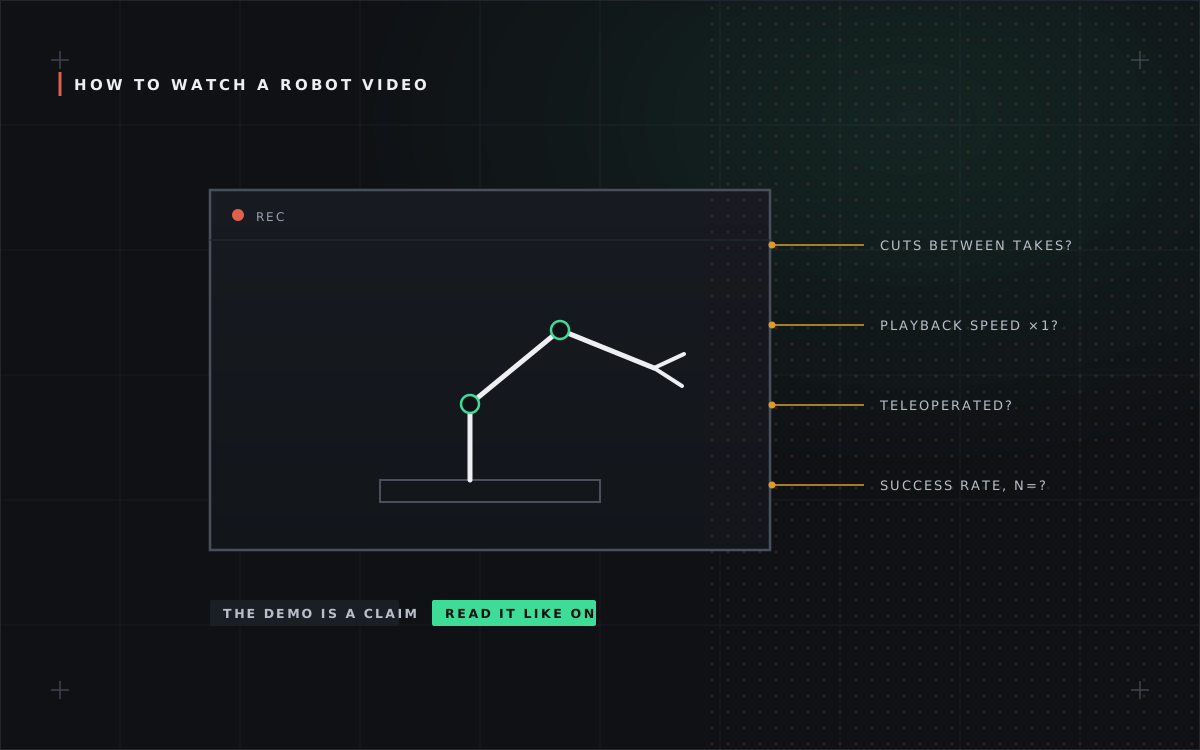
Robots may struggle in real-world environments, but on stage they hold all the advantages.PATRICK ZHANG, GEOPOLITECHS - THE CAVEAT THE INDUSTRY ITSELF KEEPS REPEATING
What the spectacle is for
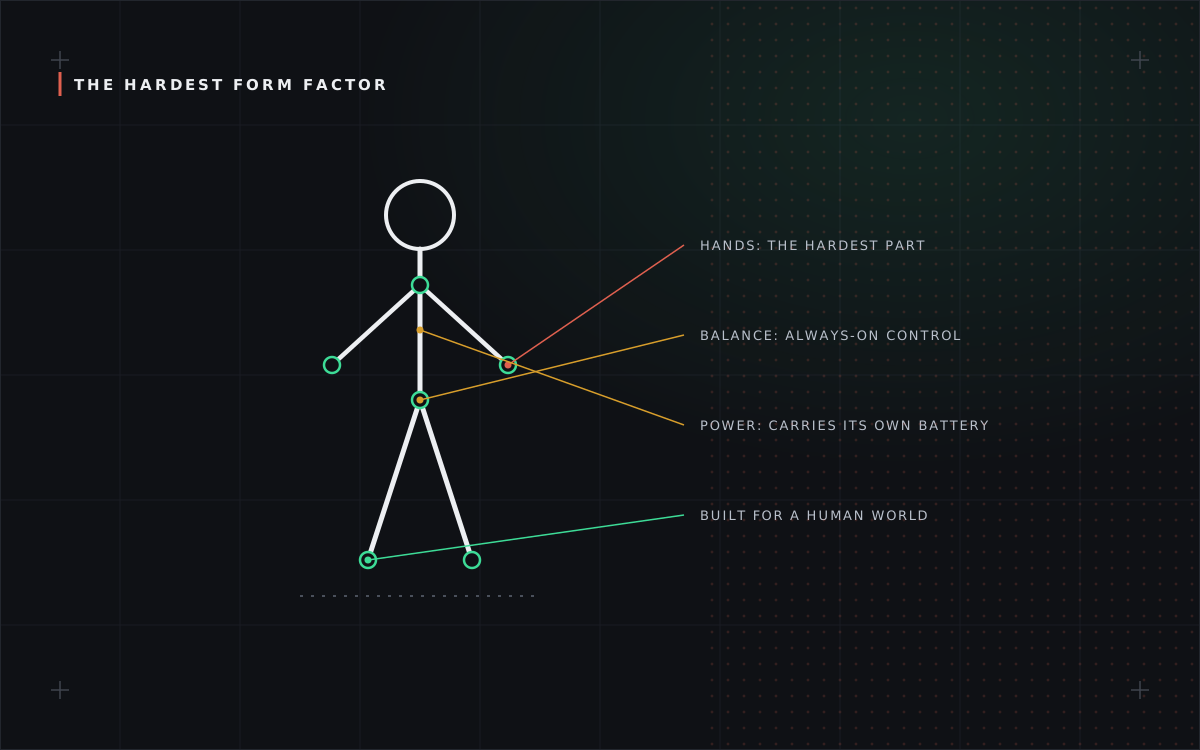
The Spring Festival Gala kung fu routine - fully autonomous this year, per the company - and the G1 that logged 130,000 steps across the Altay snowfields at minus 47°C are best read as what they are: publicised stress tests and demand generation, aimed at a domestic audience of a billion and a global audience of investors. Unitree’s own CEO names practical deployment outside controlled environments as the next major challenge, and the prospectus’s research-buyer skew says the same thing in accounting language. The gap between 13,000 shipped and 100,000 targeted is not a rounding error; it is the entire open question.
How this desk will score it
Three verifiable lines, revisited as they publish. Unitree’s first post-listing results against its own 20,000-unit target - a public company can no longer round up. The buyer mix - the quarter research-and-education drops below half of units is the quarter the industrial thesis becomes real. And warranty, service and utilisation disclosures from the automaker deployments, because a robot that ships is a milestone and a robot that is kept is a business.
FIELD NOTES - READING CHINESE HUMANOID CLAIMS
- Prospectuses beat press releases - shipment, margin and buyer-mix numbers in a listing document carry legal weight the demo reel does not.
- Separate shipped from deployed - the national target counts deployment; most current volume is research units.
- Price cuts with rising margins signal vertical integration, not desperation - the detail that makes the $5,900 entry model credible.
- Watch the buyer mix, not the unit count - it is the single line that dates the industrial transition.