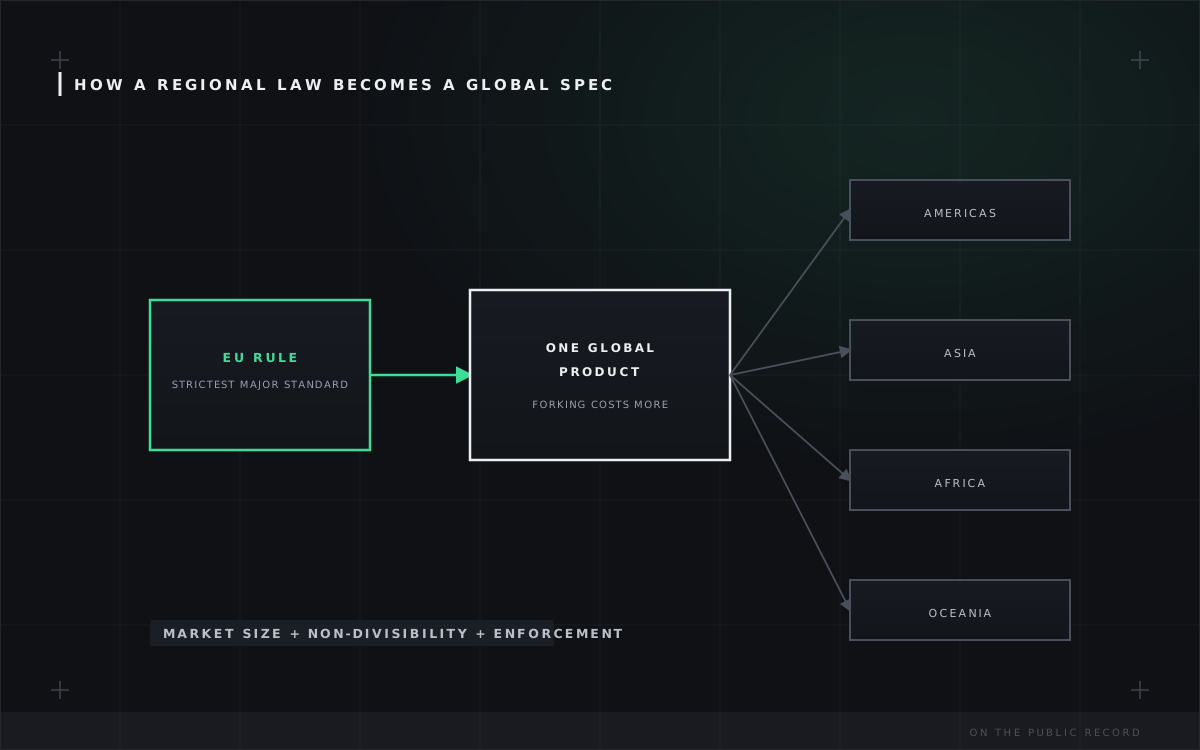
The Brussels effect is the observation - Anu Bradford’s coinage - that the European Union exports regulation without treaties, armies or even much diplomacy. It works through a mechanism any engineer will recognise: when forking a product per jurisdiction costs more than complying everywhere with the strictest rule, the strictest rule wins the world. GDPR consent banners on Ohio bakery websites are the monument. The question this column cares about is narrower: will it work on AI?
The machinery, in three parts
The effect needs three ingredients at once. A market too large to abandon - the EU’s 450 million wealthy consumers qualify. A product that resists regional splitting - one codebase, one model, one supply chain. And a regulator that actually enforces - because a strict rule nobody polices exports nothing. Remove any leg and the stool falls: content moderation never globalised because feeds fork cheaply per country; chemicals regulation globalised completely because factories do not.
Companies do not adopt European rules out of respect. They adopt them out of arithmetic.
Experiment one: the AI Act
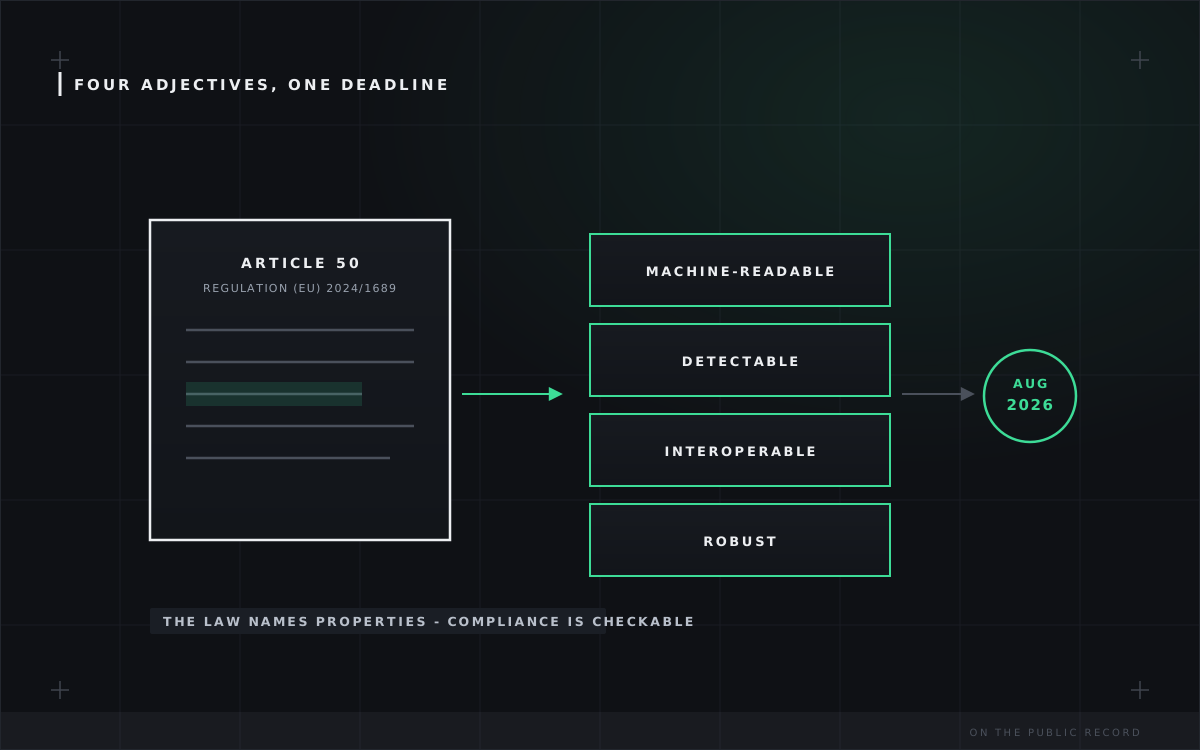
Article 50’s machine-readable marking duty, applicable from August 2026, is a nearly perfect test case - because provenance infrastructure is exactly the kind of thing you build once. The early evidence points one way: the major image and video generators moved to signing outputs by default through 2025, the C2PA standard the Commission’s draft Code names by example became an ISO standard, and marking is being wired into model pipelines globally, not geo-fenced. If that holds through enforcement, Article 50 will have set the world’s synthetic-media disclosure norm from Brussels. The counterweight to watch is the high-risk regime, where compliance costs are heavy enough that market exit - the effect’s failure mode - becomes thinkable.
Experiment two: the money
The cleaner natural experiment just concluded in stablecoins, and it cuts the other way. MiCA’s issuer rules pushed every major EU venue to delist the world’s largest stablecoin by 1 July 2026 after its issuer declined the licence - and the issuer simply kept the rest of the planet, where its supply reached record highs. Europe got a compliant domestic market; it did not export its rule. The lesson generalises: the Brussels effect fails where the regulated party can profitably divide the world - and succeeds where, as with provenance metadata baked into a model’s output layer, it cannot.
How this desk will grade it
Not by rhetoric - by three observables, reported as they land. Whether firms ship one compliance architecture worldwide or geo-fence features for Europe. Whether non-EU legislatures copy the AI Act’s language into their own bills, as they copied GDPR’s. And whether any major provider formally withdraws a capability from the European market rather than comply. Each is a checkable fact, and the next eighteen months will supply all three.
THE DOCKET - WHAT WOULD CHANGE OUR READING
- A major model geo-fenced for Europe - the effect’s clearest failure signal.
- Article 50 language appearing in third-country bills - its clearest success signal.
- First AI Act penalty against a non-EU provider - the enforcement leg, tested.
The Policy Desk reads legislation so you don’t have to - but this is journalism, not legal advice. For decisions that bind you, read the statute or ask a lawyer who has.