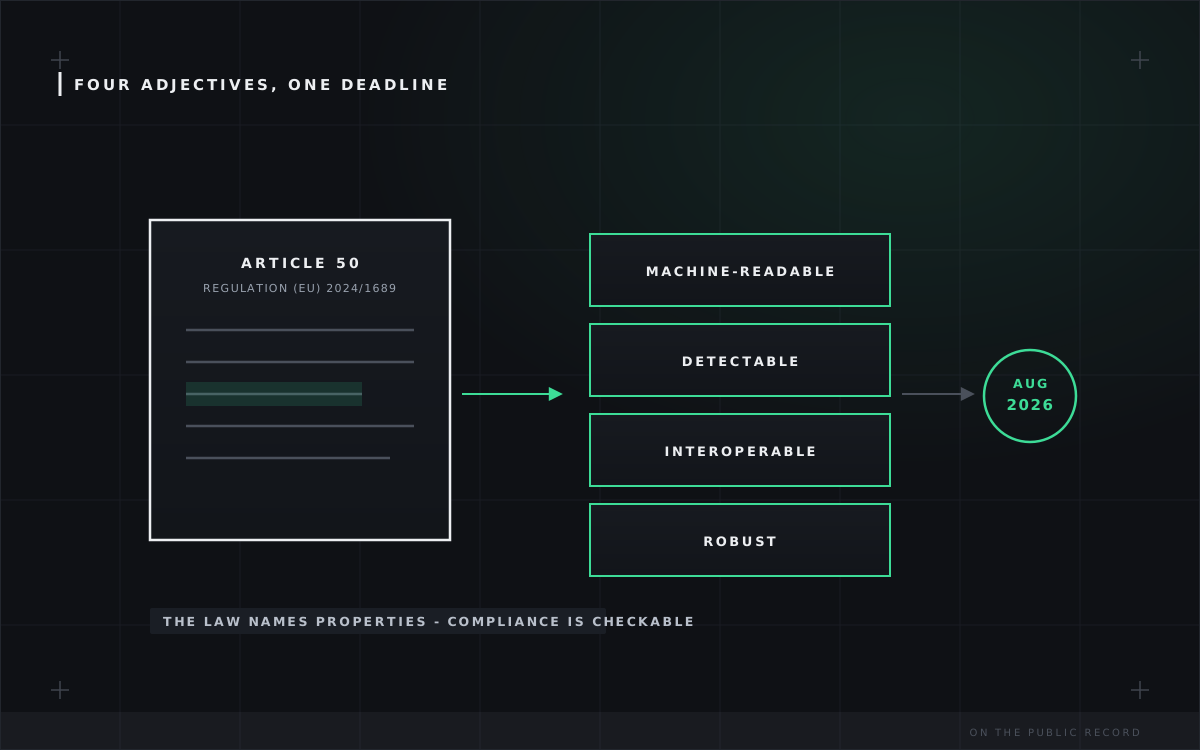
Regulation (EU) 2024/1689 - the AI Act - contains one provision that touches nearly every company using generative AI for European audiences, and it is not in the high-risk chapters everyone reads first. Article 50 is four transparency duties long, applies from 2 August 2026, and carries penalties of up to €15 million or 3% of worldwide turnover. This brief sets out what the text says, who it binds, and what changed in the frantic months before the deadline.
What the text says
Article 50 imposes four distinct obligations. Providers of AI systems that interact directly with people must design them so those people know they are dealing with a machine - Article 50(1). Providers of generative systems must ensure outputs are marked in a machine-readable format and detectable as artificially generated - Article 50(2), the marking duty, with a carve-out for assistive editing that does not substantially alter the input. Deployers of emotion-recognition or biometric-categorisation systems must inform the people exposed to them - Article 50(3). And deployers must visibly disclose deepfakes, and AI-generated text published to inform the public on matters of public interest - Article 50(4), which contains the clause every newsroom should memorise: the text-labelling duty falls away where content has undergone human review and a person holds editorial responsibility for its publication.
WHY MACHINE-READABLE MATTERS
Article 50(2) is a provenance mandate, not a caption mandate: the marking must be detectable by software, which is why the Commission’s draft Code of Practice names C2PA Content Credentials as an example mechanism. A visible label satisfies 50(4); it does not satisfy 50(2).
The spring that rewrote the schedule
Three instruments landed in quick succession this year, and together they define what compliance will actually look like. On 17 December 2025 the AI Office published the first draft Code of Practice on Transparency of AI-Generated Content, covering the 50(2) and 50(4) duties; a second draft followed in March 2026, and the final Code was published on 10 June 2026 - complete with the standardised visual label idea, simply “AI”, localised per language. On 8 May 2026 the Commission published its first draft Guidelines interpreting the whole Article, consulting until 3 June; they define “technically feasible” as an objective standard that does not bend for smaller providers. And on 7 May 2026 the Parliament and Council reached provisional agreement on the Digital Omnibus, which - if adopted - gives generative systems already on the EU market before 2 August a transition to 2 December 2026 for the 50(2) marking duty. Systems placed on the market from 2 August comply from day one, and every other Article 50 duty keeps its August date.
Deepfake, as defined
Article 3(60): AI-generated or manipulated image, audio or video that resembles real persons, objects, places, entities or events and would falsely appear authentic. The Commission’s draft Guidelines read this broadly - resemblance plus potential to mislead, not sophistication, is the test.
Who is in scope
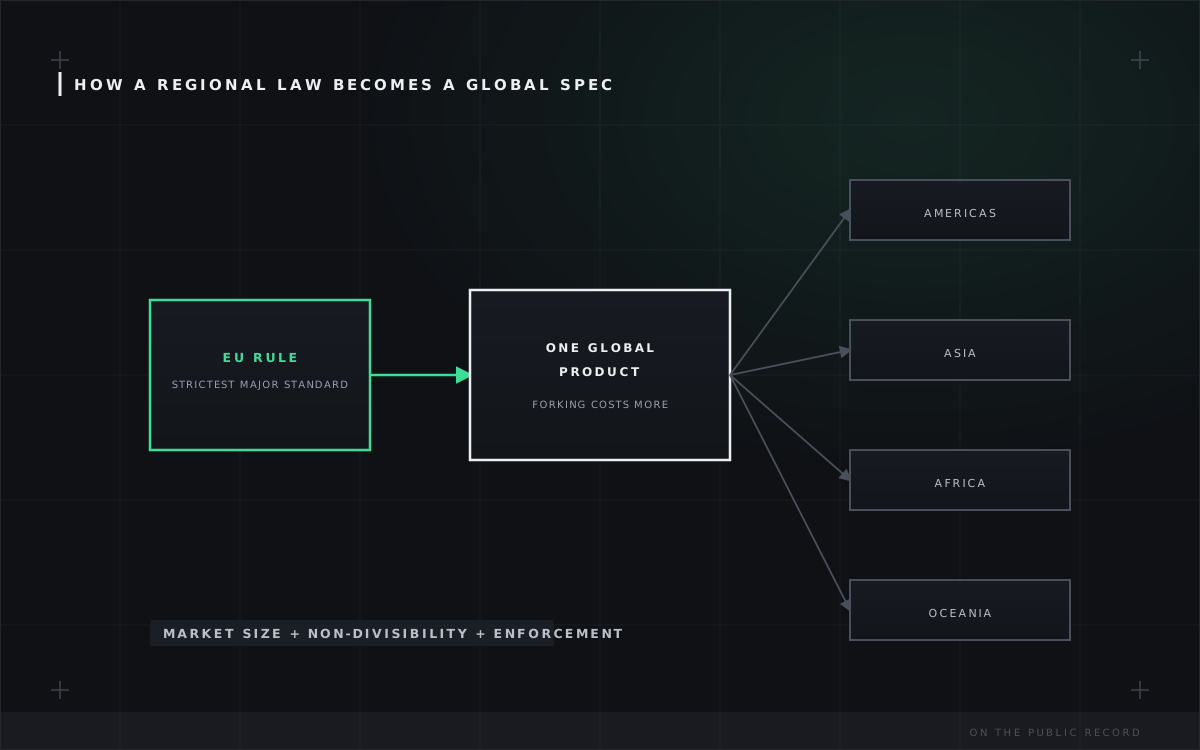
Territorially, everyone whose outputs reach Europe. Article 2 catches providers placing systems on the EU market wherever they sit, and providers and deployers in third countries where the system’s output is used in the Union - the draft Guidelines’ own worked example is a third-country advertiser deploying a celebrity deepfake shown to EU audiences. The two-track enforcement design matters too: signatories of the finalised Code will find supervision focused on Code adherence, while non-signatories must demonstrate compliance including a gap analysis against it - formally voluntary, practically magnetic.
The desk’s reading
The genuinely open questions are technical, not legal. Marking short text robustly, watermarks that survive re-encoding, a common icon across languages - the Code’s working groups have been chewing on exactly these, and the answers will decide whether August feels like a switch or a scramble. What is not open is the direction: content that cannot say where it came from is about to become a liability class in the world’s second-largest market.
THE DOCKET - DATES THIS DESK IS WATCHING
- 10 JUN 2026Final Code of Practice published - the compliance pathway is now fixed.
- 2 AUG 2026Article 50 applies - all four duties, for systems newly placed on the market.
- 2 DEC 2026Omnibus transition ends - marking duty bites for pre-existing generative systems, if the provisional agreement is adopted as reached.
- ONGOINGFirst enforcement actions - which market-surveillance authority moves first, and against what.
The Policy Desk reads legislation so you don’t have to - but this is journalism, not legal advice. For decisions that bind you, read the statute or ask a lawyer who has.