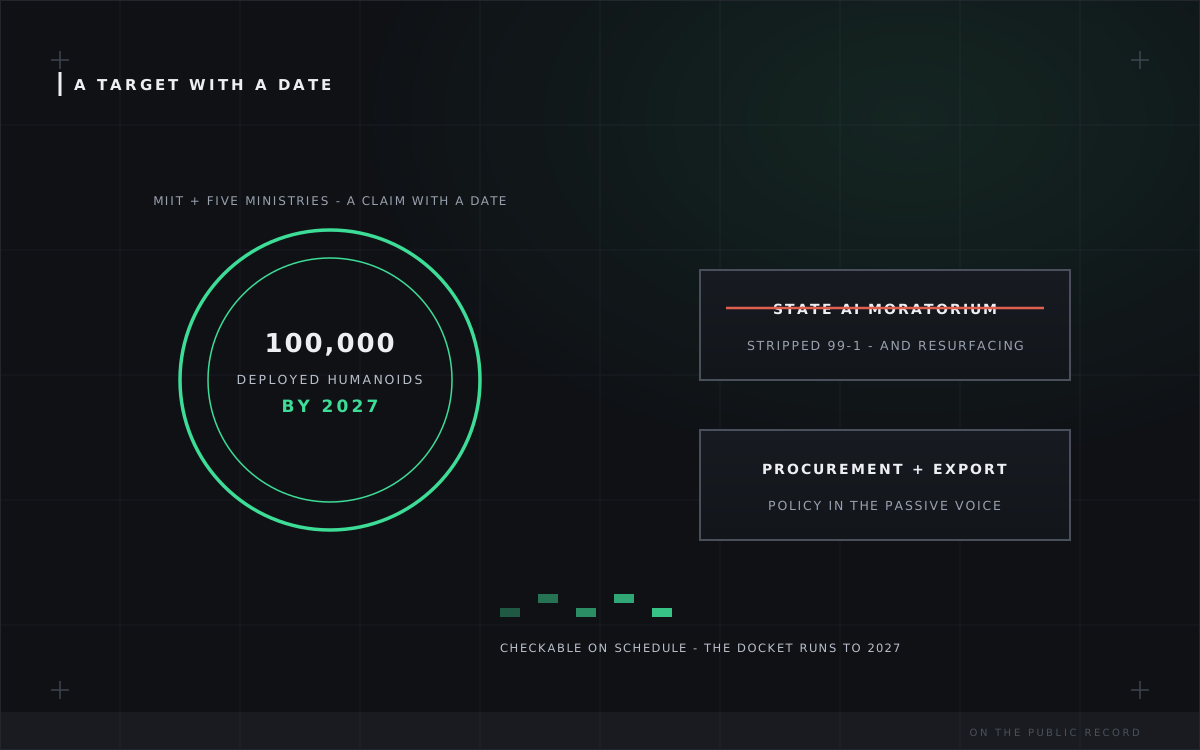
Strip the geopolitics to the documents and the humanoid-robot race is a controlled experiment in policy style. One government published a target: the 2025 Humanoid Robot Action Plan, issued by MIIT and five fellow ministries, commits China to 100,000 deployed humanoid robots by 2027 - a number, a date, a verifiable claim of the kind this desk exists to hold. The other spent 2025-26 on a meta-question: a proposed ten-year moratorium on state AI regulation that the Senate stripped 99-1, and that keeps resurfacing in must-pass vehicles. One system is arguing about robots. The other is arguing about who may argue about robots.
What the Chinese approach verifiably bought
Whatever one thinks of targets, the base underneath this one is on the record: more than 70% of the world’s 2025 industrial-robot installations, a domestic supply chain vertically integrated down to motors and reducers, and - the genuinely new artefact - IPO prospectuses turning a subsidised sector into an audited one. The costs are equally documentable: subsidy figures circulate (up to $20 billion in some reporting) that this desk cannot pin to a primary source and therefore will not assert, and analyst counts already anticipate consolidation from a hundred-plus humanoid firms to a few dozen - industrial policy’s standard tuition bill, paid in duplicated capacity.
THE READING RULE FOR TARGETS
A state target is a claim with a date, which makes it journalism’s favourite kind: checkable on schedule. 100,000 deployed by 2027 will be true, false, or - most likely - redefined. Watch the word “deployed”. Definitions are where targets go to survive.
What the American approach is actually deciding
The US fight is constitutional plumbing with industrial consequences. Preemption would trade fifty experiments - Colorado’s high-risk framework entered enforcement on 1 February 2026, Texas signed its own act in 2025 - for one federal vacuum, on the theory that regulatory patchwork slows deployment. The 99-1 vote suggests the states are not volunteering. Meanwhile the federal government’s revealed preference is procurement and export control rather than targets: shaping who gets chips and contracts, not how many robots exist by when. It is industrial policy conducted in the passive voice - and it, too, produces checkable artefacts, just slower ones.
The column’s wager
This desk declines to referee the systems and will instead do its job on both: the 2027 target goes on the docket as a dated claim; the preemption riders go on the docket as a recurring vote; and the honest scoreboard is neither GDP rhetoric nor gala footage but deployment counts, prospectus revenue lines, and - on both shores - who is actually buying the machines. Policy with a number beats policy without one, for our purposes, for exactly one reason: it can be marked wrong.
THE DOCKET - DATES THIS DESK IS WATCHING
- 2026Preemption riders - whether a state-AI moratorium returns attached to must-pass legislation.
- 2027The 100,000 test - China’s deployed-humanoid target comes due; definitions audited here.
- ONGOINGProspectus season - each robotics IPO converts industrial policy into auditable numbers.
The Policy Desk reads legislation so you don’t have to - but this is journalism, not legal advice. For decisions that bind you, read the statute or ask a lawyer who has.