The industry’s word for a model inventing a citation, a case, a person, is “hallucination” - a term that frames confident falsehood as a glitch to be patched. The framing is convenient and wrong. Fabrication is the default behaviour of the underlying machine, truthfulness is the add-on, and every claim about “reducing hallucinations” reads differently once that order is clear.
The mechanism, without mystique
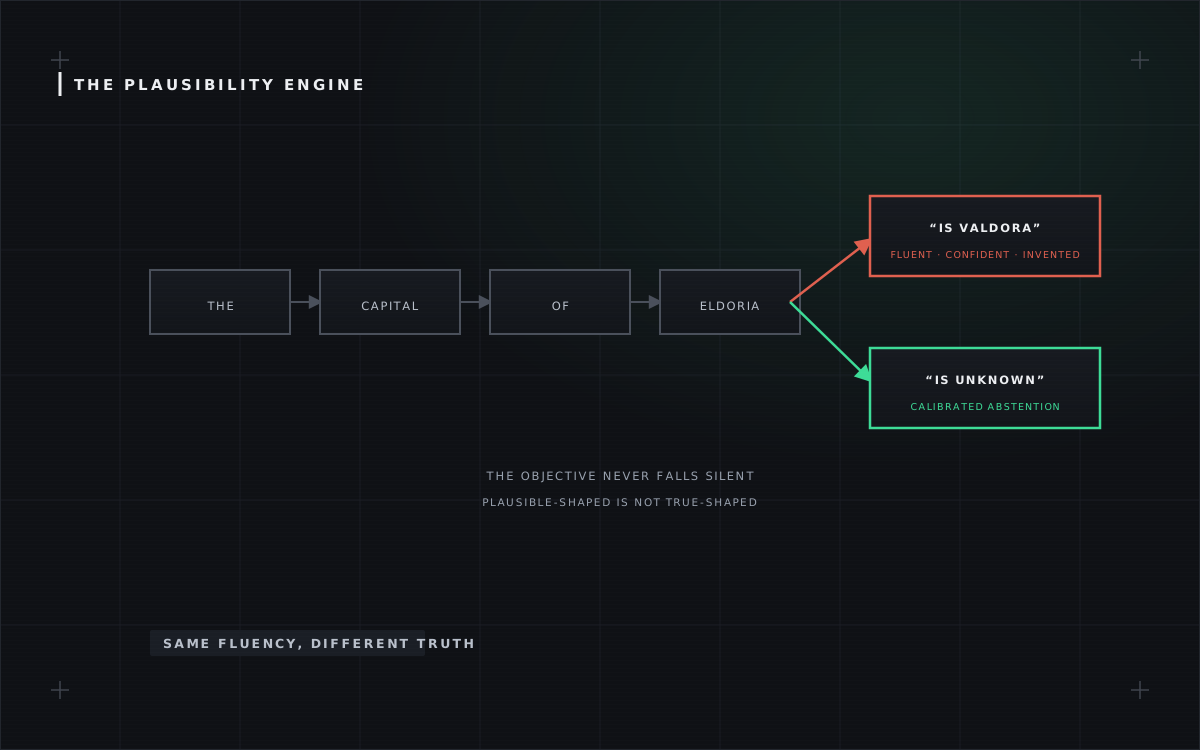
A language model is trained on one objective: given text, predict what plausibly comes next. Nothing in that objective references truth. The training corpus contains truth in bulk, so plausible continuation and accurate statement usually coincide - but where the model’s knowledge thins, the objective does not fall silent; it does exactly what it was built to do and produces the most plausible-shaped continuation available. A citation-shaped string. A biography-shaped paragraph. Fluency and confidence are properties of the generation process, not signals of knowledge, which is why the falsehoods arrive wearing the same tone as the facts. Asking why a model hallucinates is asking why a next-word predictor predicts next words.
Why it will not be “fixed”
Progress is real - larger models know more, and post-training teaches them to hedge, refuse and say “I don’t know” more often. But the failure mode shrinks rather than closes, for structural reasons: the world changes after training; the corpus contains confident falsehoods the model learned as faithfully as facts; and there will always be a boundary where knowledge ends and the plausibility engine continues alone. Worse, the boundary is invisible from inside - a model has no reliable internal flag distinguishing recall from confabulation, which is why its stated confidence correlates so poorly with its accuracy. Any vendor sentence of the form “our model no longer hallucinates” is therefore a category error at best. The defensible claims are quantitative and situated: this rate, on this distribution of queries, measured this way.
What actually works, and what each fix costs
The genuine mitigations all share a shape: they stop asking the generator to also be the knower. Retrieval grounds answers in fetched documents, converting open recall into reading comprehension - the single biggest practical lever, at the price of inheriting the retrieval system’s blind spots and the model’s occasional loyalty to its priors over the page in front of it. Tool use hands arithmetic, lookups and code to systems that cannot confabulate. Verification layers - a second pass checking claims against sources, or requiring citations that resolve - trade latency and cost for caught errors. And calibrated abstention, training the model to decline beyond its competence, trades helpfulness for honesty, a dial every product sets somewhere. None eliminates the mechanism; each buys down its frequency in exchange for something, and a vendor who names the exchange is a vendor describing engineering rather than magic.
How this desk reads the claims
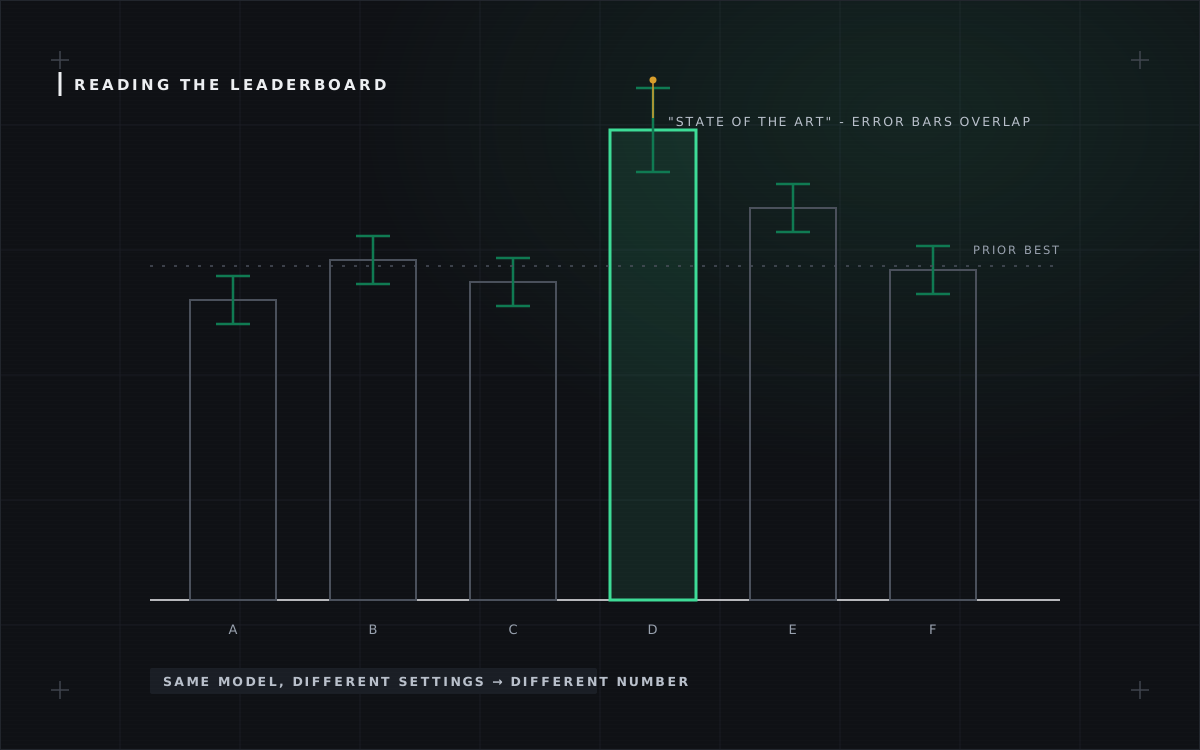
Accuracy claims get the benchmark treatment this publication applies everywhere: on what task distribution, measured how, at what refusal rate - since a model that answers less will err less, and an “accuracy improvement” may be an abstention increase wearing better clothes. Meanwhile the burden sits where it always did: a model’s output is a draft of the world, not a record of it, and systems deployed where facts matter need the checking machinery built in. That is not a criticism of the technology. It is its specification - and the companies that state it plainly are, reliably, the ones whose numbers survive checking.
THE DESK’S BOTTOM LINE
Fabrication is the default output of a plausibility engine; truthfulness is the engineering bolted on top. Price every accuracy claim in its three coordinates - task distribution, measurement method, refusal rate - and remember that a model that answers less will always err less. The companies that state the trade plainly are, reliably, the ones whose numbers survive checking.