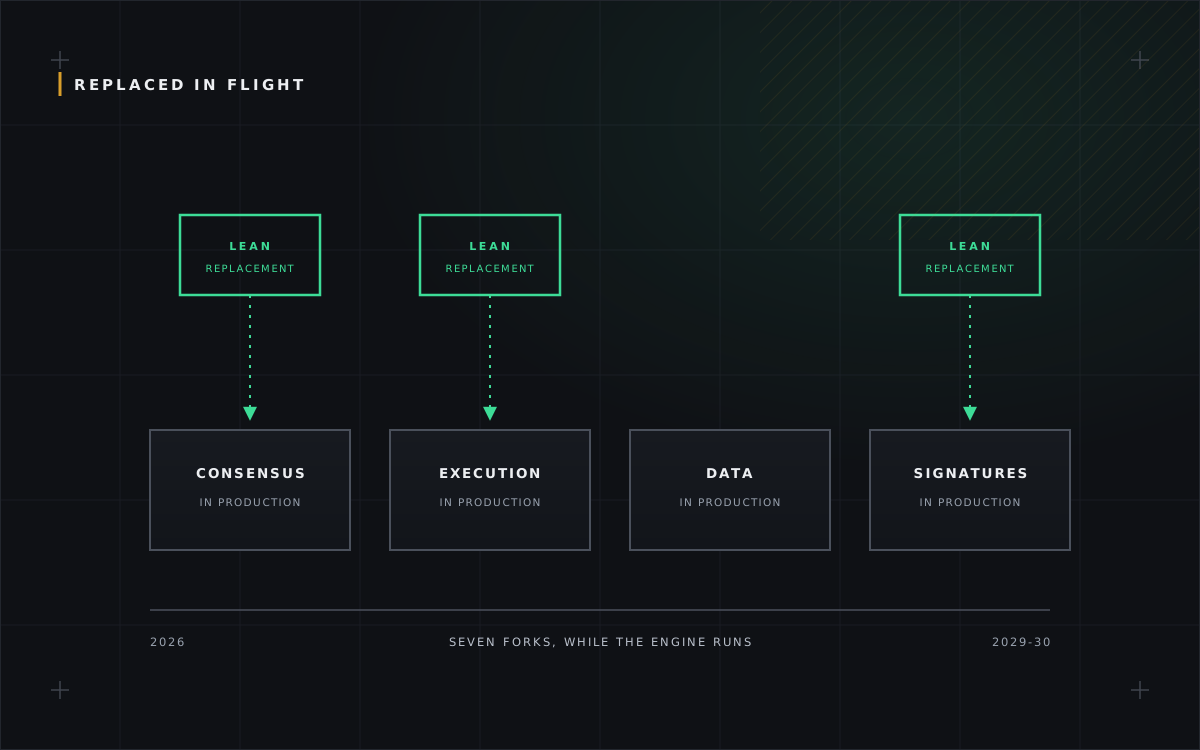
This week Ethereum’s co-founder published what he called the network’s largest transformation since the Merge: a 3-4 year programme to replace nearly every major component of the protocol, with post-quantum cryptography and default privacy moved up the priority list. It landed while the year’s actual scheduled upgrade, Glamsterdam, is still awaiting activation. For a desk that trades in the distance between roadmap and mainnet, this is the assignment - so here is the blueprint sorted into three piles: shipped, scheduled, and sketched.
Shipped: the base layer got cheap while nobody updated their priors
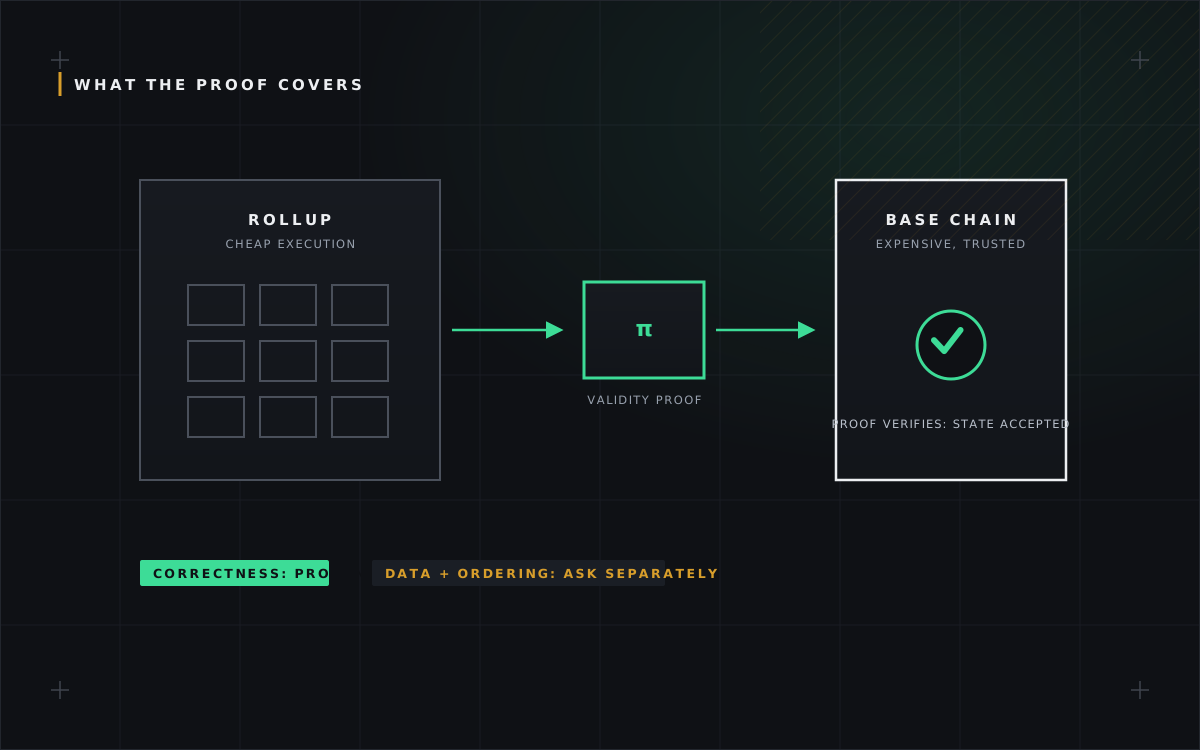
Start from the verified present, because it undercuts the folklore. Standard gas has run around 0.15-0.5 gwei through the spring; a basic transfer costs under a cent, with rollups now carrying roughly 95% of the network’s transactions and the base layer typically running below target. “Mainnet is too expensive” is, on the current record, a stale premise - which matters for reading everything below, since the rebuild’s scaling case is built on extending a trend already in evidence, not conjuring one.
Scheduled: Glamsterdam, the fork with a number attached
The next named upgrade carries two headline changes with checkable mechanics: block-level access lists (EIP-7928), which let clients know in advance which state a block touches - unlocking parallel execution - and enshrined proposer-builder separation, an infrastructure change that removes a trust dependency in block production. Together, per the protocol’s own documentation, they make it safe to raise the block gas limit from today’s 60 million toward roughly 200 million. Activation is expected in the second half of this year; the desk treats the feature set as firm and the date as an intention, on Ethereum’s well-earned record of shipping late and shipping.
SCHEDULED vs SKETCHED - THE ONE-LINE TEST
Scheduled work has an EIP number, client implementations and a testnet. Sketched work has an essay. Both matter; only one belongs in a production plan. The rebuild currently lives almost entirely in the second category - by its author’s own framing.
Sketched: the rebuild itself
The proposal’s substance is a reprioritisation more than a surprise: quantum resistance promoted from someday to centrepiece - directly consequential, since the network’s current signatures and its KZG blob commitments both rest on pairing-based cryptography a large quantum computer would break - and privacy elevated toward a default property rather than an application-layer add-on. The stated horizon is 3-4 years. The desk’s scepticism is the boring, earned kind: Ethereum’s major transitions have historically run long, the Merge itself arrived years behind early talk, and a programme touching “nearly every major part” multiplies coordination risk across client teams that have just spent a year on the proving stack. None of that makes the direction wrong. It makes the timeline a claim - and claims are what we file.
How this desk will track it
Three markers, checkable in public. Glamsterdam’s actual activation date against “H2 2026.” The first rebuild components to receive EIP numbers and client commitments - the moment sketch becomes schedule. And the post-quantum migration plan for existing commitments, the genuinely hard part nobody should pretend is a parameter change.
WHAT WE’RE WATCHING
- Glamsterdam activation - the H2 2026 intention meeting a block height.
- First rebuild EIPs - sketch crossing into schedule.
- Gas-limit trajectory - the 60M → ~200M path, taken or deferred.
The Blockchain Desk covers markets because markets are where these systems are tested. Nothing on this desk is investment advice, and The Verifier holds no positions in the assets it covers.