Compute is the substrate of everything else this publication covers, and it is announced in the least checkable units in technology: peak FLOPs, headline megawatts, chips “on order”. The numbers are rarely false. They are just measured where the light is best.
| The headline says | The question to ask |
|---|---|
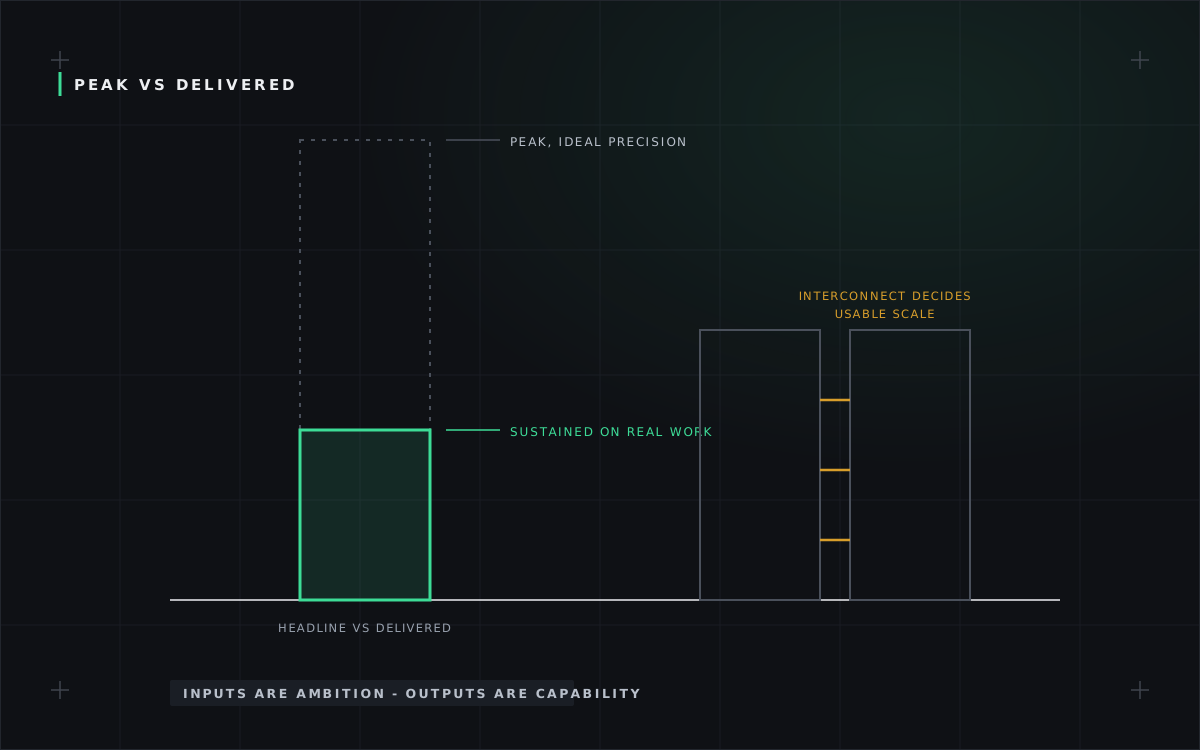
| “X petaFLOPs of compute” | Peak theoretical, or sustained on real workloads? Utilisation on large training runs is routinely a fraction of peak. |
| A very large FLOPs figure | At what numeric precision? Halving precision roughly doubles the headline number for the same silicon. |
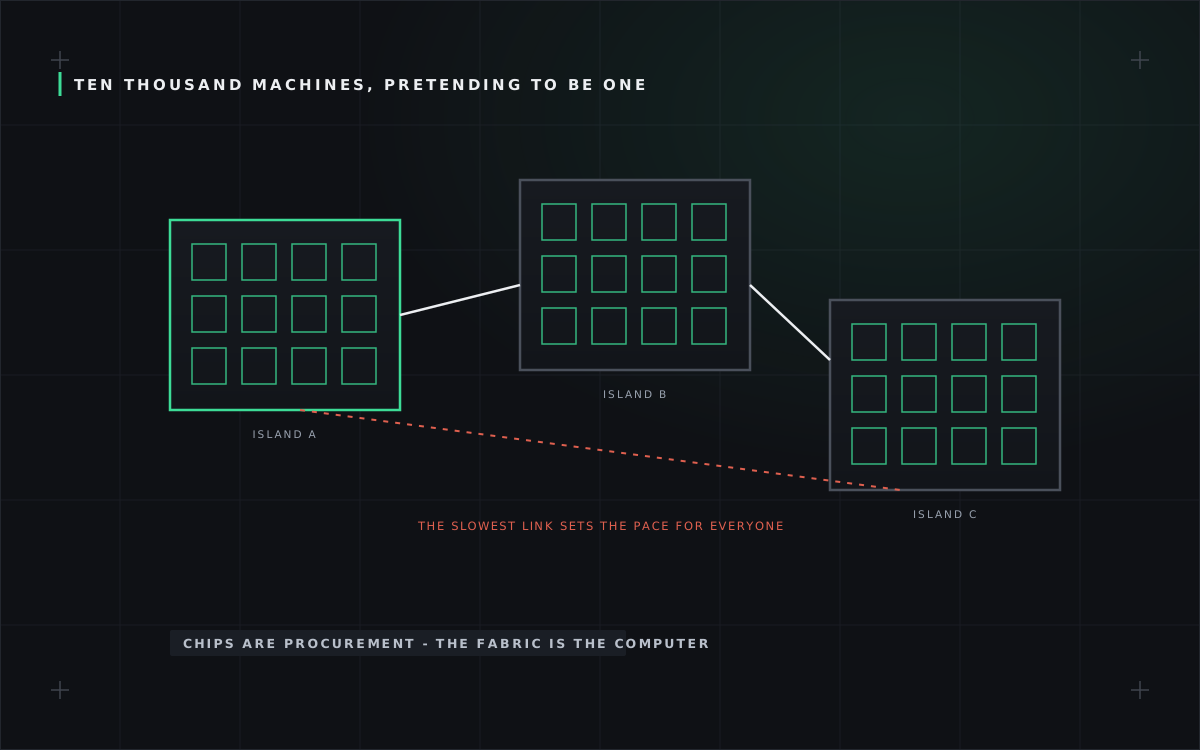
| “N thousand chips” | Networked how? Past a certain scale, the interconnect - not the chips - decides how much of the cluster you can actually use at once. |
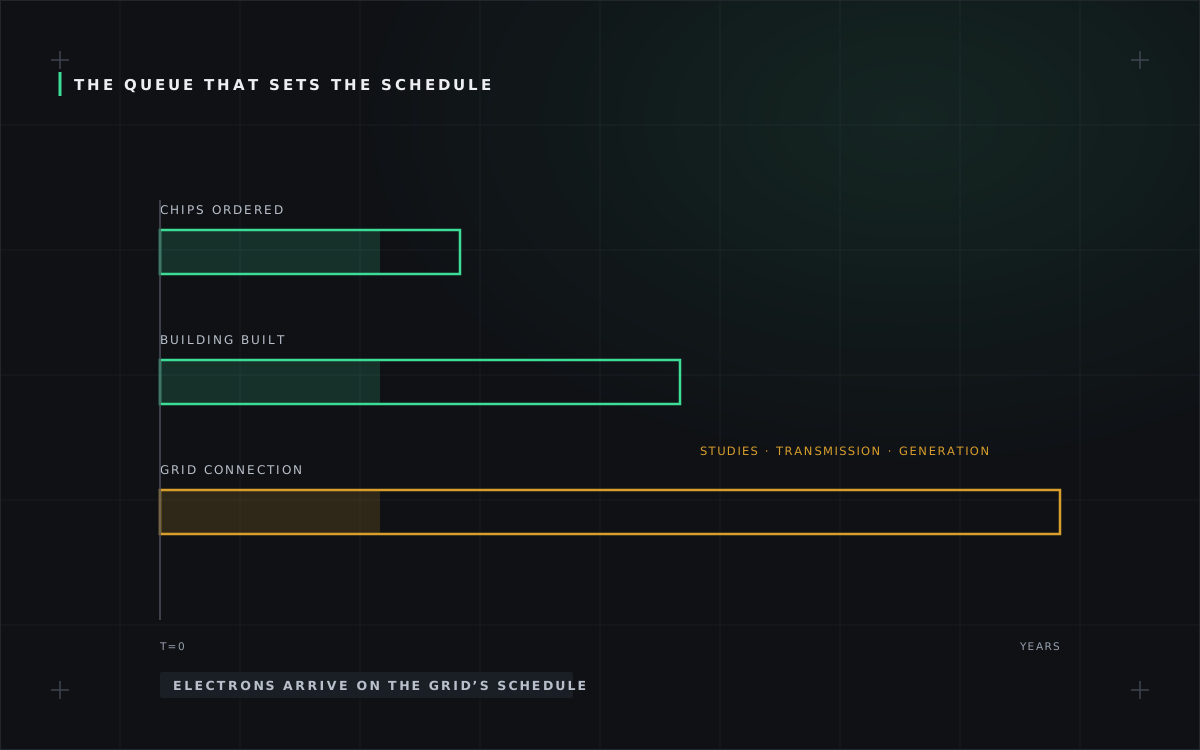
| “A new N-megawatt data centre” | Contracted power, or delivered? Grid connection timelines, not construction, are frequently the binding constraint. |
Why precision games work
The precision row deserves the most suspicion, because it is invisible to non-specialists. Modern accelerators quote different throughput at different numeric formats, and each step down the precision ladder roughly doubles the marketing number. Two announcements can describe similar hardware while differing by large multiples, simply by quoting different formats - and comparisons across vendors are meaningless until the formats match.
The number that would settle it
The figure that would make compute claims genuinely comparable is delivered cost per unit of useful work on a stated workload - training tokens per dollar, or proofs per joule for the verification systems our ZK desk covers. Almost nobody publishes it, for the same reason benchmark footnotes go missing: precise numbers are commitments. Which supplies the reading rule for this desk: a compute announcement quantified in inputs - chips, watts, dollars spent - is a statement of ambition. One quantified in outputs is a statement of capability. The gap between the two is where the checking happens.
Utilisation: the number nobody quotes
Between peak specification and delivered work sits the most consequential unnamed ratio in the industry. Large training runs routinely realise only a modest fraction of theoretical throughput - the model floating-point utilisation - because real workloads stall on memory, wait on the network, checkpoint, restart after hardware faults, and idle while stragglers catch up. The fraction varies by model shape, software maturity and cluster design, and improving it is a full-time engineering discipline at every serious lab, precisely because a few points of utilisation are worth more than a shipment of new chips. Which yields the sharpest question you can ask of any compute boast: at what utilisation? Silence is an answer.
How to read a cluster photo
Announcements love the aisle shot - racks to the horizon, cables in perfect combs. Translate it. Racks show capacity purchased, not capacity integrated: the distance between delivery and a functioning training cluster is measured in networking, cooling, power provisioning and months. The cabling tells you interconnect generation if you can see it, and nothing about topology, which is what actually bounds scale. And the building says little about the grid: a completed hall waiting on a substation is a warehouse. The photo is a claim about inputs; every question that matters is about the output side, and outputs come as numbers, not aisles.
Training and inference are different products
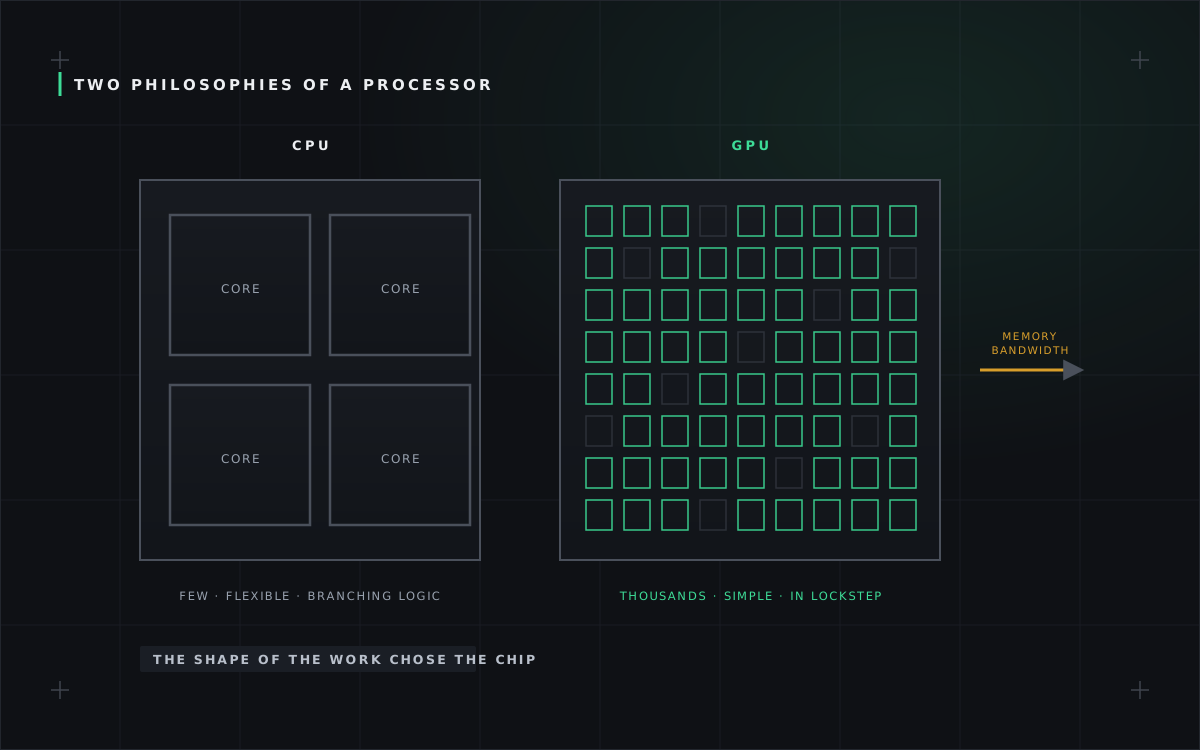
One last translation prevents a category of confusion: compute for training and compute for inference are economically distinct, and announcements blur them. Training wants one enormous, tightly-coupled cluster where the interconnect is everything and utilisation is fought for in fractions; a training buildout is a bet on future capability. Inference wants many smaller, cheaper, latency-placed deployments where the binding metrics are cost per token served and requests per second per rack; an inference buildout is a claim about present demand. The same megawatt headline can therefore mean “we intend to build a bigger model” or “customers are using the ones we have” - opposite signals wearing one number. The follow-up that separates them is blunt: what fraction of this capacity serves paying traffic today?
MWSecured power beats chip count - ask for the interconnection date
4-7 yrsGrid queue in the major hubs - the silent schedule
MFUDelivered utilisation - the gap between bought and used
THE NUMBERS THAT MATTER
- Energised megawatts vs announced megawatts - the ratio that separates sites from slides.
- Power source and its lead time - grid (years), gas (18-24 months), or wishful.
- GPU-count phrasing - “up to”, “planned”, and “across sites” are three different confessions.