The phrase this publication takes its spirit from - verify rather than trust - did not begin as advice about cryptocurrency. It began as a worldview: that the ability to check things for yourself, without asking permission from a bank, a government or a platform, is a form of freedom worth building tools for.
The timestamp and the signature
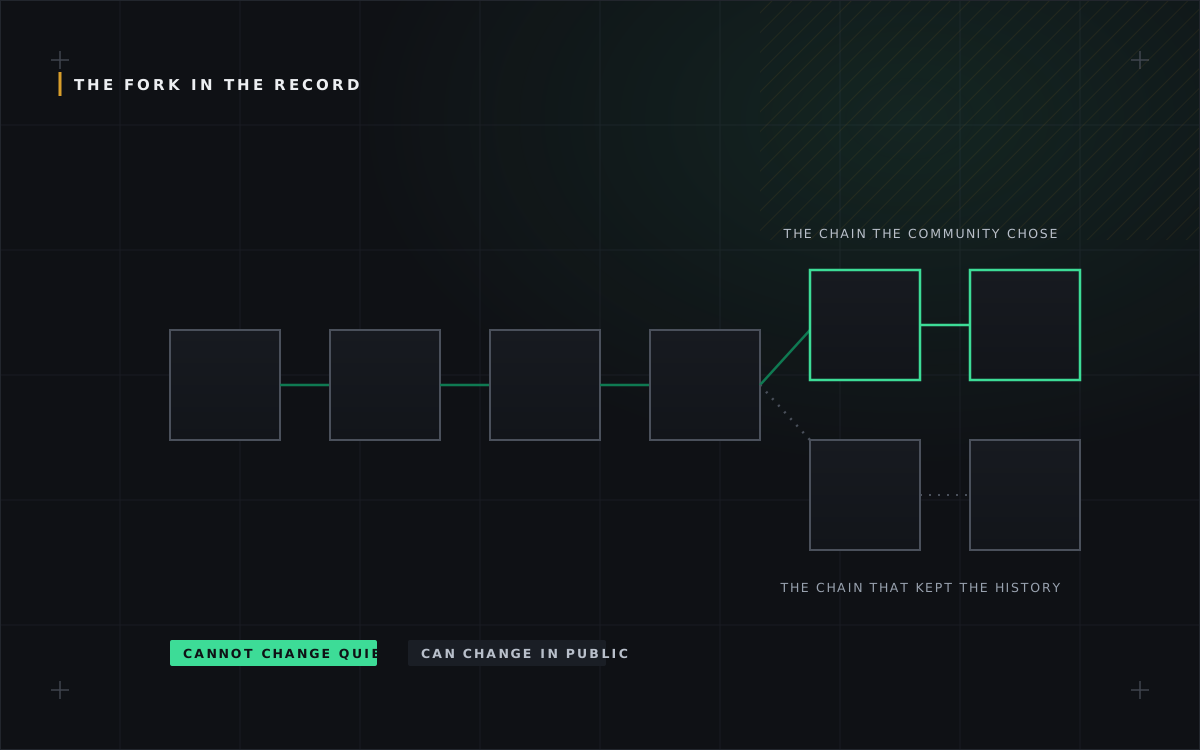
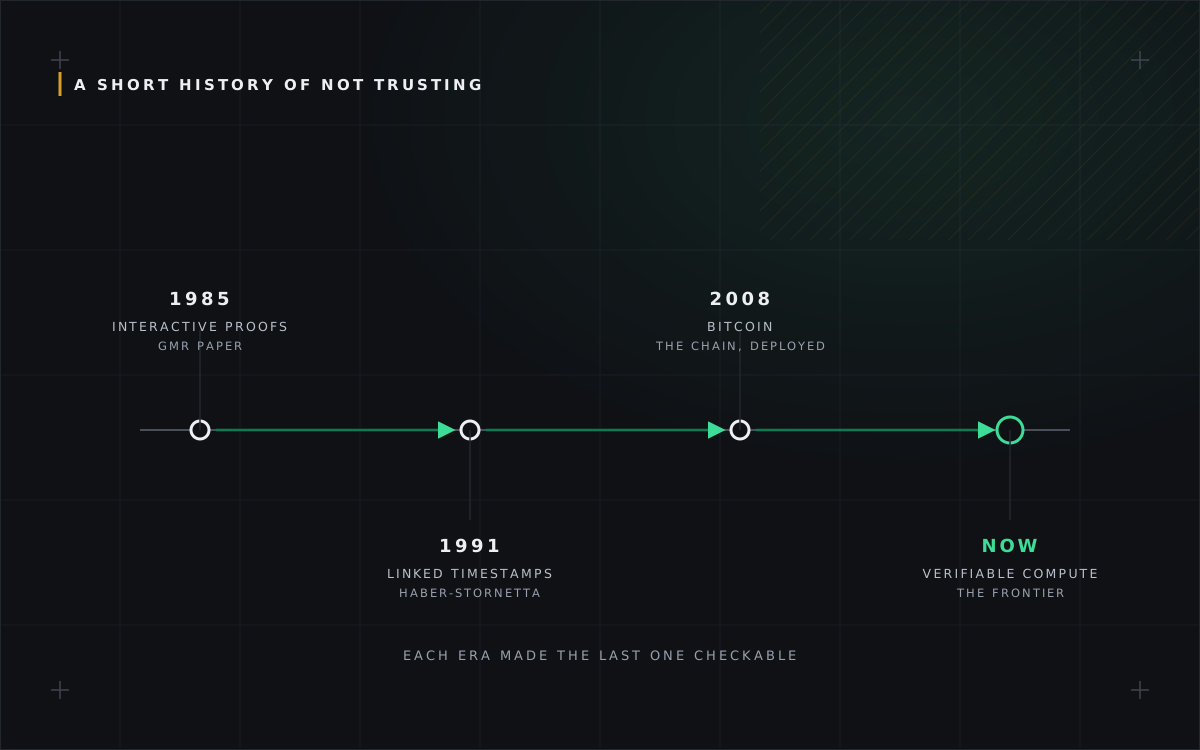
Two threads from the late twentieth century converge on everything we cover. The first is verifiable time. In 1991 Stuart Haber and W. Scott Stornetta published a method for time-stamping digital documents so that no one - not even the time-stamping service - could backdate them. Their linked-hash construction, chaining each record to the last, is a direct ancestor of the blockchain, cited in the Bitcoin white paper itself.
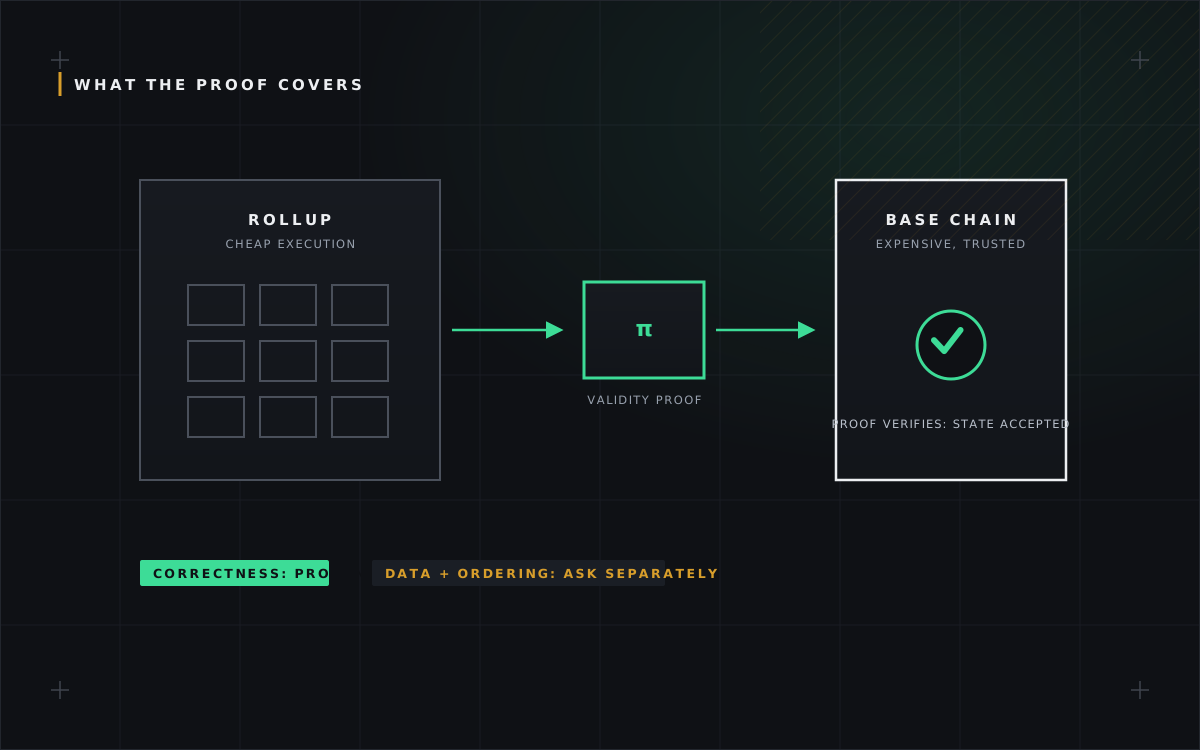
The second is verifiable knowledge: the zero-knowledge proofs of Goldwasser, Micali and Rackoff, which showed that you could prove a fact while revealing nothing else. Together, these gave a small community a radical proposition - that trust in institutions could be replaced, in specific and important cases, by mathematics anyone could check.
The cypherpunks
Through the 1990s a loose movement gathered around this idea. David Chaum’s work on digital cash and blind signatures showed that privacy and verifiability need not be opposites. The cypherpunk mailing list circulated the conviction that cryptography was a political tool: that writing code was a way to secure liberties that law alone would not. Their slogan - that cypherpunks write code - was a statement that the future would be built, not lobbied for.
Trust in institutions could be replaced, in specific and important cases, by mathematics anyone could check.
For years this was a fringe pursuit. The mathematics was elegant but the machines were too slow, and the applications stayed theoretical. What changed was performance. As proof systems became efficient enough to run in production, the cypherpunk proposition stopped being philosophy and became infrastructure.
From the margins to the mainstream
That is the arc worth understanding, because it explains the moment we are in. The tools built by people who distrusted institutions on principle are now being adopted by those same institutions - newsrooms signing their photographs, camera makers embedding provenance at the sensor, standards bodies writing verification into law. The politics have softened into pragmatism, but the core insight is unchanged.
Synthetic media has made everyone, briefly, a cypherpunk. When you cannot trust what you see, the ability to verify it for yourself stops being an ideology and becomes a daily necessity. This publication exists at that meeting point: the old radical idea, arriving at last in the mainstream it was always meant for.
When code was contraband
It is easy to forget how contested this lineage was. Through the early 1990s, strong cryptography was classified by the United States as a munition: exporting it required an arms licence, and the author of PGP - the program that put military-grade encryption in civilian hands - spent three years under criminal investigation for making it downloadable. Activists printed source code in books, because books were speech, and t-shirts bearing an encryption algorithm were technically export-controlled clothing. The courts eventually agreed that code is expression, the investigation was dropped, and the export regime crumbled - but the episode set the movement’s temperament: build the tools, publish the mathematics, and let verification rather than permission decide what stands.
What the lineage teaches
Three habits from that history run straight into this publication’s method. Publish the primitive, not just the product - every system in this story arrived as a paper anyone could attack. Assume the adversary - designs were judged by what a motivated opponent could do, not by what a demo showed. And distrust convenience - the systems that survived are the ones that never asked users to take the operator’s word. Journalism about this industry inherits the same obligations, which is roughly why we exist.
Every idea in this timeline was dismissed as paranoid exactly once, and adopted as infrastructure exactly once - in that order.The Blockchain Desk
WHAT WE’RE WATCHING
- The next dismissed idea - today’s equivalent candidates: proof-carrying computation at the base layer, and private-by-default identity. Both currently sound paranoid. Noted.
The Blockchain Desk covers markets because markets are where these systems are tested. Nothing on this desk is investment advice, and The Verifier holds no positions in the assets it covers.