This desk spent the spring watching a neighbouring beat - the quantum-versus-Bitcoin argument - and noticed something the coverage kept missing. The entire threat runs through one mathematical door: Shor’s algorithm against elliptic-curve signatures. And an entire family of proof systems never used that door.
The accidental endorsement
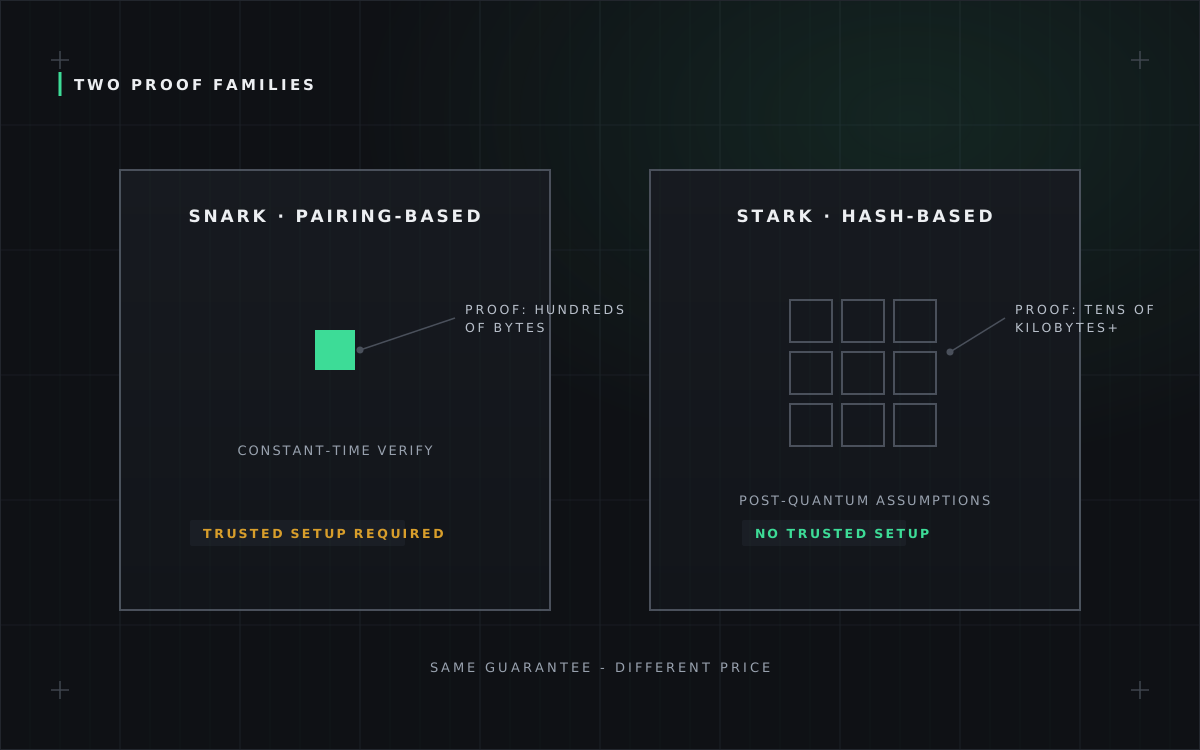
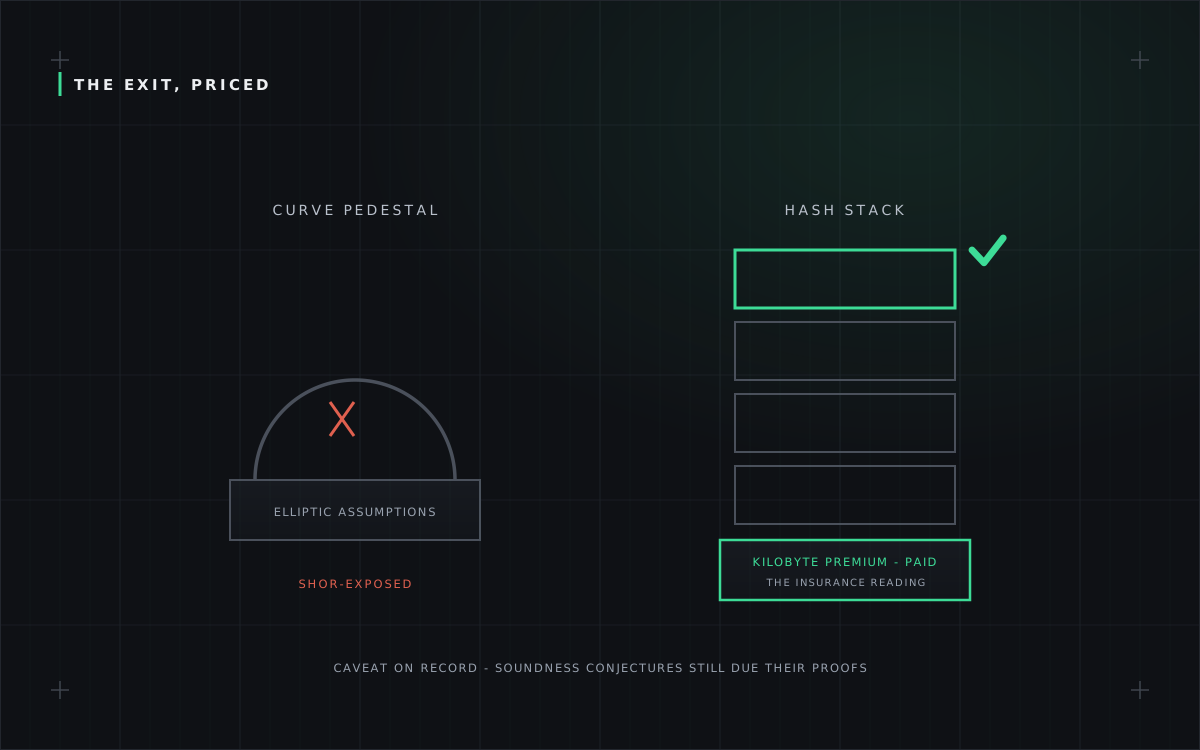
Recall the trade at the heart of our SNARK-versus-STARK explainer: STARKs charge you tens of kilobytes per proof, and in exchange rest on hash functions and information-theoretic arguments rather than elliptic-curve assumptions. In 2023 that read as an expensive purity. In 2026 - with a Google paper cutting the quantum cost of breaking elliptic curves twenty-fold, NIST deprecating current encryption by 2030, and Ethereum’s own post-quantum roadmap naming hash-based Winternitz signatures and STARK-based authentication as destinations - it reads like foresight. Hashing is not immune to quantum attack, but Grover-style speedups against it are quadratic, answerable by longer outputs; Shor against curves is exponential, answerable only by leaving. The proof family that paid the kilobyte tax owns the exit.
The kilobytes were never the price of pedantry. They were the premium on an insurance policy that just got its first claim scare.
The caveat this desk owes you
Quantum-resistant is not assumption-free. Several fast STARK-family systems lean on conjectures about their coding-theoretic machinery that recent research has begun to erode - the very reason the base-layer teams set 2026 targets of 128-bit provable security. Surviving Shor while failing a classical soundness conjecture would be a pyrrhic sort of longevity. The honest summary: the quantum debate strengthens the case for hash-based systems without settling the security work still in front of them - and a desk that flagged the second point last quarter is not going to drop it while making the first.
GO DEEPER
- The families compared - our SNARKs-and-STARKs explainer, kilobyte trade included.
- The neighbouring beat - the Blockchain Desk’s brief on what actually changed in the quantum timeline.
- The security year - why 2026’s proving milestones are about bits, not seconds.